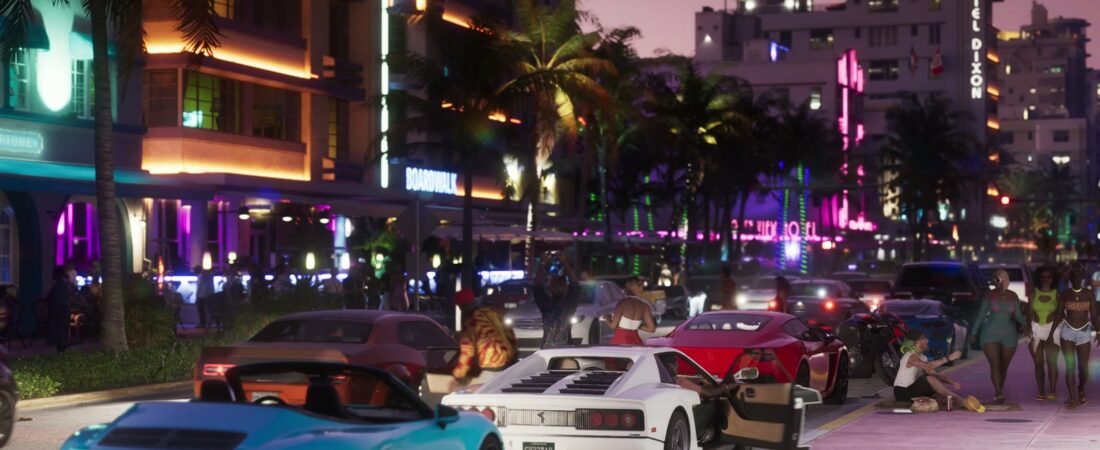
You have probably seen the headline version of this story: Miami approved a $4 million GTA 6 takeover. I went looking for the paperwork, because the paperwork is always weirder than the headline, and here is the short version: the headline is wrong in almost every direction at once. There was no single approval, no single $4 million check, and no single “Miami.” Three different South Florida governments dealt with Rockstar separately, on different terms, and the coverage keeps mashing them into one story.
So let us do it properly, government by government, because the real version is better than the fake one.
Government one: Miami Beach, and the 4-3 vote
On September 10, 2026, the Miami Beach City Commission voted 4-3 to let its city manager negotiate a GTA VI beach branding deal with Amplify Marketing, the agency Rockstar hired, and, unusually, to sign it without bringing it back for a second vote. Mayor Steven Meiner flagged that last part at the meeting as out of the ordinary.
The yes votes: Commissioners Tanya Katzoff Bhatt, Laura Dominguez, Joseph Magazine and Monica Matteo-Salinas. The no votes: Mayor Meiner, Commissioner Alex Fernandez and Commissioner David Suarez.
Suarez made his case theatrically. He played GTA footage at the dais, narrating a police chase as it ran, and then said the line that tells you exactly where he stands: “I certainly don’t want to see our brand associated with this video game. I don’t think it’s worth any amount of money.”
Matteo-Salinas, who says she has played GTA since the original Vice City era, answered the moral panic with the quote of the whole saga: “We’re not giving away pistols and cocaine to people.”
And Bhatt made the argument that probably won the room: “This is coming to Miami Beach with or without us, and to pretend that it isn’t is a missed opportunity.”
As debated that day, the deal was modest on purpose. Only the Roman numeral “VI” and the words “Vice City,” never the full Grand Theft Auto name, on the beach chairs and umbrellas of Boucher Brothers, the company that runs the beach concessions. October 15 to December 31, with Art Basel carved out. Dominguez said the logos would not go on lifeguard stands or iconic places. Remember that sentence. It matters in a minute.
The money, line by line
Now the detail the headlines skipped entirely: the September resolution contains no dollar figure at all. None. The roughly $3 million number came from discussion at the meeting, and Bhatt put the total benefits at “close to $4m or so,” a package she pitched as paying for the Flamingo Park football field renovation the city has not funded. Discussed is not approved. Those are different words for a reason.
The signed agreement is a separate document, dated October 15, and it surfaced because a GTA fan outlet, GTAVice, found it in City Clerk records. Neither Rockstar nor the city announced it. According to GTAVice’s reporting of that document, the actual numbers are these:
- A $300,000 activation fee to the city, paid in two $150,000 halves
- A $4,000,000 fee funded by Rockstar to Boucher Brothers, the concessionaire. Under Boucher’s own contract with the city, about half of its fees flow to the city, so Miami Beach sees roughly $2 million of that $4 million, not the whole thing
- A custom marketing car appraised at $643,443, which gets auctioned in 2027 with the proceeds going to the city
So the real $4 million exists. It is just not a check to Miami, and it was never the thing the 4-3 vote approved. The vote approved opening negotiations. The money arrived a month later, in a document nobody held a press conference about.
The five installations, and the sentence that did not survive
The agreement, per GTAVice’s document reporting, approves five “Vice Beach” installations:
- A giant Vice BEACH sign in Lummus Park, on the grass east of Ocean Drive, roughly 31 to 34 feet wide
- Muscle Beach, at 9th Street and Ocean Drive, painted pink and branded
- A lifeguard tower north of 14th Street, repainted blue and pink with the VI logo
- A 10-foot VI sculpture on Lincoln Road
- The W South Beach hotel turning its rooftop “W” into a “Y,” under a separate $650,000 deal with the hotel
Read that list again against the September debate. A park sign, a branded gym and a painted lifeguard tower are precisely the placements Dominguez said would stay off limits. The final deal put the branding on city property anyway. To be fair to the city manager, the resolution’s text did allow signage on “such other public property as the City Manager may determine,” so the fine print covered it. But the spirit of what was sold to the public in September and the letter of what got signed in October are not the same thing, and nobody from the city has commented on the gap.
Practical details from the same documents: everything has to be removed or covered from November 29 to December 6 for Art Week, at a $5,000 per day, per asset fine, the campaign ends December 31, and it all has to be gone by January 15, 2027. One permit covering most of the installations was still pending as of October 23, and the agreement let Rockstar walk away by November 5 if permits were missing. Whether every piece actually went up on schedule is, as of this writing, unverified. I am not going to pretend otherwise.
Government two: the county, which never voted at all
Miami-Dade County is a different government, and it did its own deal: $975,000 for a giant pink “Welcome to Vice City” sign on the roof of the county-owned Kaseya Center, home of the Miami Heat. Mayor Daniella Levine Cava approved it herself, under her authority over contracts below $1 million. $975,000 is $25,000 below the line that would have forced a County Commission vote. Commissioners found out the details later, at a budget hearing, and not all of them were thrilled. The sign went up by helicopter on September 22, lit up on October 1, and stays until at least April 11, 2027. The money is earmarked for turning the lot behind the arena into a public park.
The county kept going. On October 28 it announced a wider GTA VI advertising package valued at around $3.9 million, the Kaseya deal plus media buys at the airport and on transit. That is a package value, not a single payment, whatever the headlines said. And on November 18, launch eve, the Heat host Milwaukee as “Vice City,” special court, special uniform, on ESPN. That one is official, announced by the Heat and Rockstar together.
The opposition had its say early here. On September 3, before any of these votes, Sheriff Rosie Cordero-Stutz and Commissioner Juan Carlos Bermudez put out a joint statement urging the county to reject promoting the game. Its closing line deserves to be quoted whole: “Miami-Dade County is not Vice City.”
Somebody should tell the arena roof.
One more county item, filed under things that do not exist: a pitch deck from June proposed a “Vice City Airport” arrival experience, wrapped Metromover trains, a PortMiami installation and Vice City manhole covers. None of it was approved. A county spokesman said it plainly: “Nothing has been formally agreed to or approved.” If you see the manhole covers reported as real, you are reading the pitch deck, not the news.
Government three: the City of Miami, and the banners
The third government, the City of Miami proper, passed Ordinance 19783: a temporary downtown “Event Area” where GTA VI banners can run up to 10,000 square feet, with a $208,000 fee for any banner over 5,000 square feet, proceeds to a greenway project, same October 15 to December 31 window. The ordinance’s own preamble compares this launch to the Super Bowl, the Miami Grand Prix and the World Cup. When your city’s legal documents start sounding like a Rockstar press release, the takeover is not really a metaphor anymore.
Meanwhile, in Barcelona
And because a beach in Florida was apparently not enough, on October 25 the GTA VI logo and the words “Coming November 19” ran on the pitchside LED boards at El Clásico, Barcelona against Real Madrid at Camp Nou, one of the most watched club matches on Earth. Boards, to be precise, not the stadium screens and not a TV ad, whatever the looser retellings said. Real Madrid won 2-1. Rockstar has not commented on the placement. It did not need to. The boards did the talking.
My take
I cover this game every day and even I underestimated the scale here. Rockstar did not buy ads in Miami. It negotiated with three governments, survived a 4-3 vote and a sheriff’s press release, got its logo on an arena roof without a vote, turned a hotel’s letter into a different letter, and put its release date on the boards at El Clásico. The fictional city is being built in the real one, on a contract, with fines for Art Basel week.
The $4 million headline is wrong. The real story, a city arguing with itself about what its name is worth, is so much better.
I already walked through the real-world Miami spots turning into GTA 6 in another piece if you want the tour version of this takeover. This one is the receipts version.
Sources
- City of Miami Beach Commission meeting, September 10, 2026 (city stream and adopted resolution), via Miami New Times and PC Gamer coverage of the vote
- GTAVice.net (iGrandTheftAuto), October 21-22, 2026, reporting of the signed October 15 agreement found in City Clerk records, including the fee structure and the five Vice Beach installations
- The GTA 6 News, October 24, 2026, summary of the agreement and permit status
- Miami Herald, county agreement reporting (Kaseya Center sign, $975,000, April 11, 2027 term), via IGN’s review of the county paperwork
- Miami-Dade County, joint statement of Sheriff Rosie Cordero-Stutz and Commissioner Juan Carlos Bermudez, September 3, 2026 (miamidade.gov)
- City of Miami, Ordinance 19783, legislative file
- Beebom and TalkEsport, October 26, 2026, El Clásico LED board placement
- SanInPlay, whose Miami coverage started this dig; his videos are the origin of the assignment, not a source for the facts above
Get Daily Checkpoint in your inbox
The Checkpoint Poll
Leave a Reply