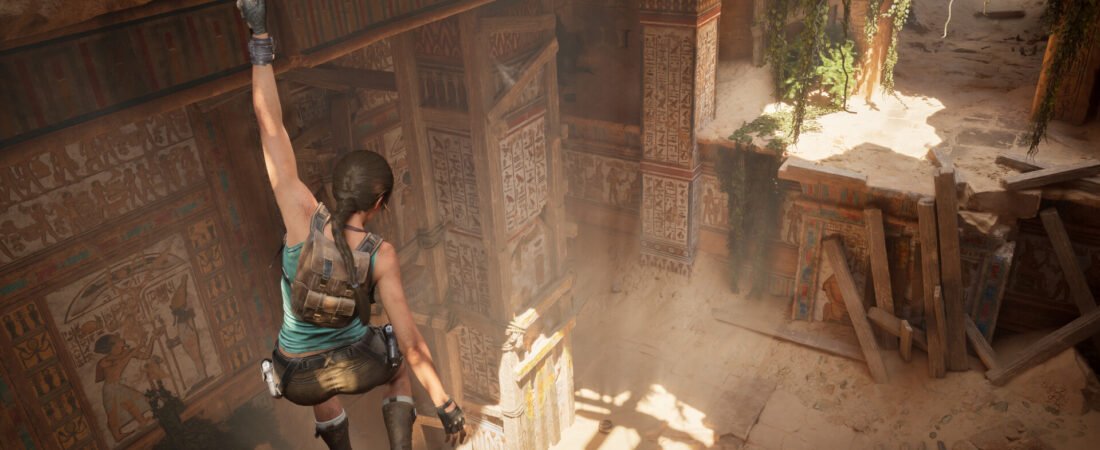
Somebody at Crystal Dynamics looked at the single most crowded month of 2027 and said: perfect, put Lara there. I went through the file on this one like a detective, because half of what is floating around about this game is noise. Here is what is actually confirmed.
By Ruan Martini, Daily Checkpoint, November 1, 2026
Let me set the scene, because the scene is doing half the work here. February 2027 is a pile-up. Metro 2039 lands on February 4. God of War Laufey lands on February 16. Persona 4 Revival lands on February 18. Fable lands on February 23. And right in the middle of that traffic jam, on February 12, Lara Croft comes back in Tomb Raider: Legacy of Atlantis, a full remake of the game that started everything in 1996. Five giants, three weeks, one wallet. My wallet has already filed a complaint.
I track releases for a living on this site (the full board lives on our Coming Soon page), and this is the one I keep circling back to. Not because it is the biggest game of the month. Because it is the strangest bet of the month. A remake of a thirty year old debut, built by two studios, published by Amazon, asked to carry an entire legendary franchise on its back for a full year. So I did the thing I always do. I opened the file and checked what is real.
The Confirmed File
Here is the case, receipt by receipt.
Legacy of Atlantis was revealed at The Game Awards on December 11, 2025, and it did not arrive alone. Crystal Dynamics and Amazon Games announced two Tomb Raider games that night: this remake, and Tomb Raider: Catalyst, the next all new mainline entry. Atlantis is the first one out of the gate, and the studios have described it openly as the primer, the game that reintroduces Lara before Catalyst takes the story somewhere new.
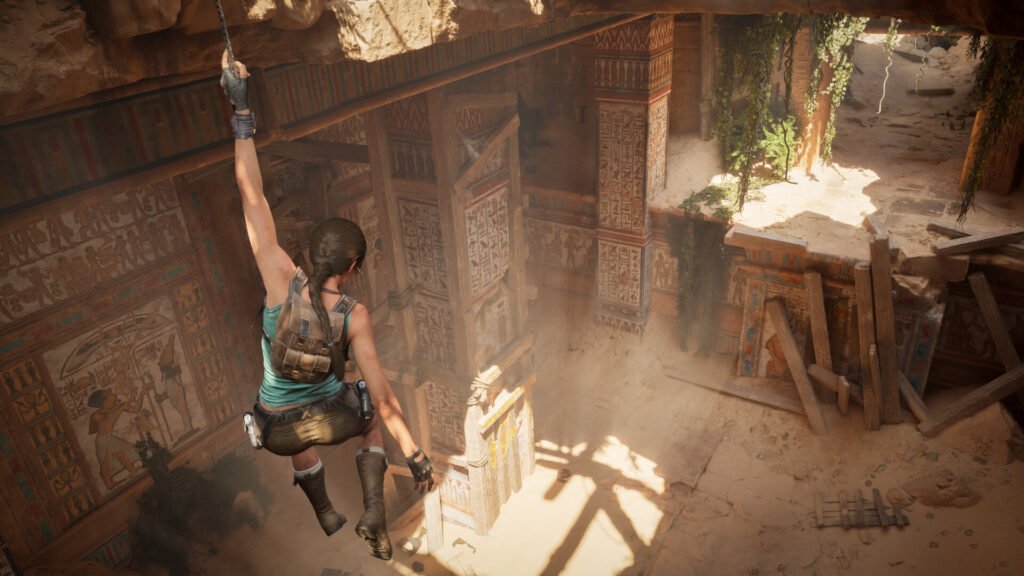
The game itself is a ground up remake of Tomb Raider from 1996, rebuilt from scratch in Unreal Engine 5. Not a remaster, not a cleanup pass on old assets. A reimagining. It is co-developed by Crystal Dynamics, the studio that has steered Lara since 2006, and Flying Wild Hog, the Polish studio behind the Shadow Warrior games, which holds art direction on this project. Amazon Game Studios is publishing. Pre-orders are already live, and the store listings show three editions: a Standard Edition at $59.99, a Deluxe Edition at $69.99 with 48 hours of early access and a post-launch story DLC pack, and a Collector’s Edition listed at $199.99. The pre-order bonus is an early unlock of the Survivor Outfit, which tells you exactly which era of Lara the marketing department thinks you miss. They are not wrong.
The date has a small story of its own. The game was announced with a 2026 window, which was never an accident: 2026 is the franchise’s thirtieth anniversary year, and a thirtieth birthday remake writes its own press release. Then, at PlayStation’s State of Play on June 2, 2026, the date moved. February 12, 2027, confirmed on stage with a gameplay trailer, and the same announcement added a Nintendo Switch 2 version launching day and date with the PlayStation 5, Xbox Series X|S and PC versions. I will not pretend the delay thrilled me. But a remake that misses the anniversary and ships finished beats a remake that ships broken on the birthday, every single time. We have all buried enough launch day disasters on this site.
The anniversary still got its moment, for the record. On October 25, 2026, thirty years to the week after Lara’s first game reached shelves, Amazon and Crystal Dynamics released a new anniversary trailer for Atlantis, another look at the remake riding the franchise’s birthday celebrations. So the thirtieth was honored, the game was not rushed for it, and everybody got to be a little bit right. As compromises go in this industry, that one is practically diplomacy.
Why Atlantis? Why the First Game?
Fair question, because on paper this is the most remade, re-released, most thoroughly excavated tomb in the series. The 1996 original has been ported to everything short of a refrigerator. So why go back?
Because the 1996 game is the one with the myth in it. The plot is pure pulp and I mean that as a compliment: businesswoman Jacqueline Natla hires Lara to recover the Scion, a powerful artifact scattered in pieces across the world, and the trail runs through the jungles of Peru, the ruins of Greece, the deserts of Egypt and a mysterious Mediterranean island, before the truth about Atlantis comes out. It has the famous T. rex in the Lost Valley. It has tombs that are actually tombs, full of traps, switches and animals that object to you. The official description for the remake promises the same route, Peru, Greece, Egypt and the island, with one design change that genuinely matters: areas that stood separate in 1996 now connect to each other, opening extra routes and different ways through the exploration. Anybody who played the original remembers it as a chain of locked rooms. A connected, rethought version of that map is the difference between a museum piece and a game.
It also helps that the 1996 game’s level list reads like a hall of fame ballot. The Lost Valley in Peru, where the game stops being polite and drops a T. rex on you in a series that had, until that exact second, contained zero dinosaurs. St. Francis’ Folly in Greece, a vertical labyrinth of rooms named after gods, still taught in level design conversations thirty years later. The Palace of Midas, where the wrong step turns Lara to solid gold and the game simply lets it happen, no apology, game over, lesson learned. Egypt’s Temple of Khamoon and the great Sphinx you climb like scaffolding. Core Design and designer Toby Gard built these places out of grids and kilobytes, and they burned themselves into a generation’s memory anyway. A remake artist does not get raw material better than that. Every one of those rooms is a promise the audience has already made to itself about how it should feel to stand there, and the entire job of this game is to keep those promises at modern scale.
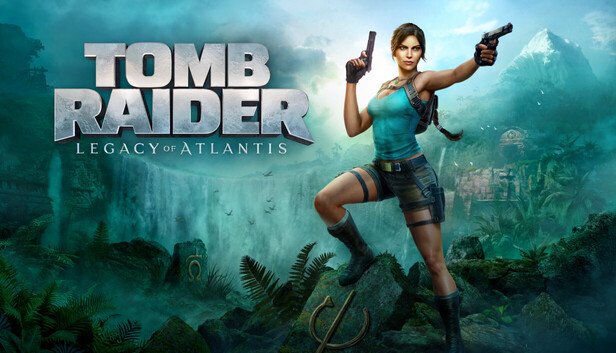
There is a second, colder reason, and the detective in me respects it. The series has three Laras now. Classic Lara, the untouchable dual pistol superhero of the nineties. Legend Lara, the quippy reboot of the 2000s. Survivor Lara, the bruised, bow carrying origin story of the 2013 trilogy. Crystal Dynamics has talked for years about unifying those timelines into one Lara, and you can see the unification standing right there in the key art: the teal top and the braid and the two pistols from 1996, worn by a Lara who looks like she has actually been through the Survivor games. Atlantis is where they weld the three versions together, inthe one story every era shares: her first big expedition.
Where Has Lara Been Since 2018?
If Atlantis feels like it is carrying a lot, that is because the series went quiet for a while, and quiet is dangerous for a franchise this old.
The Survivor trilogy closed with Shadow of the Tomb Raider in 2018. After that, the mainline series went dark. What filled the gap was archaeology of a different kind: Aspyr’s remaster collections, Tomb Raider I to III Remastered in 2024 and IV to VI Remastered in 2025, which put the classic games, tank controls and all, back on modern machines. The Angel of Darkness got its first respectable release in decades out of that deal, which is a sentence I never expected to type. Netflix ran an animated series, The Legend of Lara Croft, with Hayley Atwell voicing Lara. Good show. Not a game.
Behind the curtain, the ownership shuffled. Square Enix sold Crystal Dynamics to Embracer Group in 2022, in the same fire sale that moved Eidos Montreal, and in December 2022 Amazon Games announced its publishing partnership with Crystal Dynamics for the next Tomb Raider. So the chain of custody on Lara Croft, for those keeping score at home, runs: Core Design created her, Crystal Dynamics rebuilt her, Square Enix owned the rebuild, Embracer bought the studio, and Amazon is now paying for the comeback. Through all of it, the same studio in California kept hold of the character. That continuity is the main reason I am more hopeful than cynical about this remake. The people making it are the people who have kept her alive for twenty years.
And the follow-up is already spoken for. Catalyst, the all new game, was announced for 2027 and has since been pushed to 2028, a delay Amazon’s games leadership confirmed in interviews this year. Read that again, because it raises the stakes on Atlantis considerably. There is no bigger Tomb Raider coming to save the year if this one stumbles. For all of 2027, this remake is the franchise.
The February Problem
Now the part of the file marked in red pen. The month itself.
Understand how we got here, because it is the funniest story in the industry right now. For two years, every publisher on Earth treated November 2026 like a meteor strike zone, because GTA 6 owns it. Games fled that window in every direction, and a remarkable number of them fled to the exact same place: February 2027. The escape pod landed on top of four other escape pods. So Lara’s comeback date, February 12, puts her one week after Metro 2039, four days before a new God of War, six days before Persona 4 Revival, and eleven days before Fable. That is not a release window. That is a knife fight in a phone booth.
Does she have a lane? Actually, yes, and it is worth saying out loud. Everything else in that pile is an RPG or a shooter with RPG homework. Atlantis is the only pure action adventure in the pile: tombs, traps, platforming, puzzles, a campaign you can finish in days instead of a season. If you are a player picking one game in February, the question is not really Lara or Fable. It is whether you want a hundred hour commitment or a tight, spectacular one. The other thing she has is price discipline: $59.99 at standard in an era when this site has had to write, more than once, about $80 games and what they are doing to everyone’s backlog math.
The risk is just as clear. Remakes live or die on the gap between memory and reality. The 1996 game lives in people’s heads as a masterpiece of atmosphere, and it was, but it was also slow, tank controlled and occasionally cruel in ways modern players will not forgive. Everything Crystal Dynamics has shown suggests they know this: connected levels, redesigned spaces, modern movement. The bet is that the myth survives the modernization. It is a real bet. It is not a sure one.
What I Am Watching For
A detective keeps a list of open questions, so here is mine, the things February will answer.
First, the tone. The key art promises classic Lara, confident, pistols out, poster pose. The anniversary trailer and the Survivor Outfit pre-order bonus keep one foot in the 2013 era. Which Lara actually shows up in the game, the untouchable adventurer or the vulnerable survivor, will tell us what the unified timeline really means. My money, and my hope, is on confident. We have had three games of Lara becoming Lara. At some point she gets to just be her.
Second, the tombs themselves. The 1996 game’s best levels were pure spatial puzzles, huge mechanisms you had to read like architecture. If Unreal Engine 5 and the connected map design turn those into the biggest, smartest puzzle spaces the series has ever had, Atlantis justifies itself in one stroke. If they come back simplified and signposted, the hardcore crowd will know within the first weekend, and they will not be quiet about it.
Third, the Switch 2 version. A full UE5 remake running on Nintendo’s handheld hybrid, day and date, is either a technical flex or a cautionary tale, and there is not much middle ground. Fourth, how it treats the rest of us, the players without anything to prove. The modern Crystal Dynamics games learned to let you tune the challenge in pieces, combat here, traversal there, puzzles somewhere else, because a tomb should test your brain without demanding your blood pressure. The 1996 original offered no such mercy, and nobody is asking for the tank controls back, but the difficulty philosophy of this remake will quietly decide how big its audience gets. And fifth, the handoff: the studios keep calling this game a primer for Catalyst, so watch the ending. The 2018 game quietly teased this whole new era years before it was announced. This studio likes planting flags.
While we wait, there is homework, and it is the fun kind. The remake retells Lara’s first adventure, but the last time Crystal Dynamics retold her first adventure, they made the best selling game in the series. I wrote up that whole story, the shipwreck, the bow, the sales drama, the vindication, in our Tomb Raider (2013) retrospective, and it is honestly the perfect prequel read for February: same studio, same character, same impossible job of making an old icon feel new. They have done it once. The file says they can do it again.
So, February 12, 2027. Lara Croft walks back into the tomb she started in, thirty years later, in the loudest month of the decade. Tell me where you land: is Atlantis a day one for you, or does it lose your February to one of the other four giants? I am reading every answer, and I will be in that tomb on day one either way, taking notes like a man who gets paid by the artifact.
Sources
Release date, platforms and the State of Play announcement: Polygon’s coverage of the June 2026 State of Play, and the official Tomb Raider site news pages. Editions, pricing and pre-order details: the game’s Steam store page and PlayStation Blog pre-order coverage as compiled by Gematsu reporting. Development roles and announcement history: the Legacy of Atlantis wiki on The Games Wiki, and Amazon Games statements on the Catalyst delay as reported by Gadgets 360. February 2027 release calendar: Shacknews and StartSelect 2027 schedules, cross-checked against our own coverage slate.