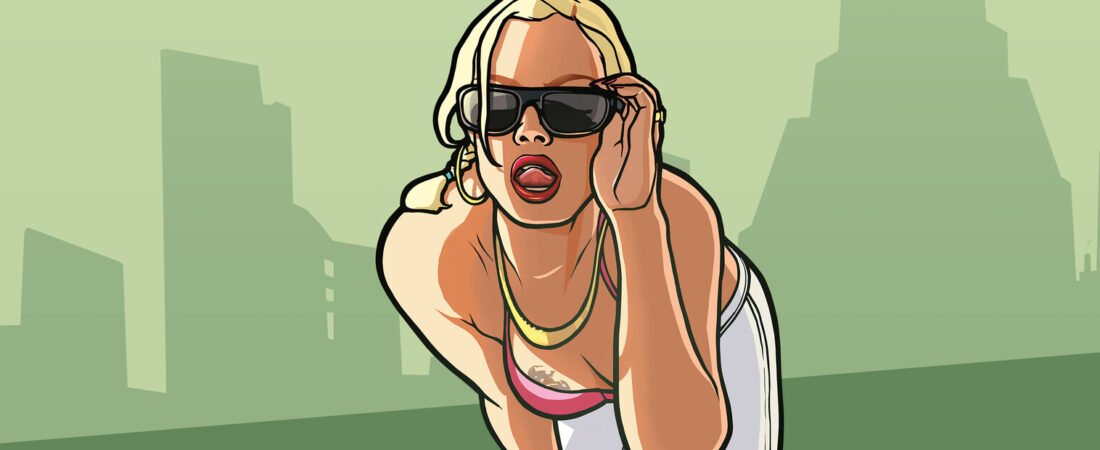
“Ah shit, here we go again.” Twenty two years later, we are all still going again.
By Ruan Martini, Daily Checkpoint, November 1, 2026

GTA San Andreas turned twenty two years old on October 26, 2026. Read that with your whole chest. The game is old enough to legally buy a beer in Los Santos, old enough to rent a car, old enough that some of the people arguing about GTA 6 trailers on the internet right now were born after it. And yet if you put a PS2 controller in my hands today, my thumbs still know where Grove Street is. Not the map. The feeling. There are better looking GTAs. There are bigger GTAs. There is a GTA, and I wrote a whole autopsy about it, that simply refuses to die. But when people ask me what GTA actually is, deep down, under the money and the records and the two decade hype cycles, I do not point at the new ones. I point at a green rag, a BMX, and a state called San Andreas.
So this is not a review and it is not a history lesson, though it has receipts in it. This is a love letter with jokes in it, written by a man who still hears that loading screen in his sleep. Let me take you home.
The Homecoming
Every GTA protagonist arrives somewhere. Carl Johnson comes home. That is the whole difference, and it is why this story still hits harder than crime sagas with ten times the cutscene budget. CJ left Los Santos for Liberty City five years before the game starts. He comes back in 1992 because his mother has been killed, and within about fifteen minutes of landing he has been picked up, robbed and thrown out of a moving police car by Officer Tenpenny, Samuel L. Jackson giving one of the great villain performances in games, all smile and menace, a corrupt cop who owns CJ before CJ has even unpacked.
Grove Street, the home he came back to save, is a ruin. His brother Sweet is holding a dying gang together with pride and denial. His friends are drifting: Ryder is lost, and Big Smoke, the most lovable man in Los Santos, is somewhere in the middle of a betrayal that an entire generation of players still has not forgiven, because Rockstar made the mistake of making him family first. That is the promise San Andreas made, and it kept it: this was not a game about a criminal rising. It was a game about a man trying to hold his street, his family and himself together while the whole state, the police, the rival gangs, the drug trade and eventually the United States government took turns pulling him apart.
And the scale of that pulling apart is still absurd. The story starts with drive-bys and turf and ends, without ever blinking, with casino heists in a Vegas parody, a jetpack stolen from a military base, a crooked intelligence agent named Toreno running CJ like an asset, and a citywide riot, modeled on the real 1992 Los Angeles riots, as the stage for the final reckoning. Any other series would call that jumping the shark. San Andreas calls it Tuesday. It earns the madness because it starts at a funeral.
The homecoming had a system, too, and it is the one I miss most in modern GTA: turf. Los Santos was a map of colored territories, and Grove Street’s green had to be earned back block by block, in open gang wars that you triggered, fought and then had to defend, sometimes with the game dragging you out of whatever you were doing because your hood was under attack. It was occasionally annoying and I would not change a second of it, because it made the map argue with you. Your street was not a backdrop. It was a responsibility, and when the story later took CJ away from Los Santos for half the game, you felt the distance the way he did. When he finally came back to take the streets again, it landed like a title fight. Games now give you territory systems with spreadsheets. San Andreas gave you a corner, a color and a reason.
Three Cities, One State, Zero Permission Needed
People forget what a violent act of ambition this map was in 2004. Not a city. A state. Los Santos, the sun bleached sprawl of Los Angeles. San Fierro, all hills and fog and trams, San Francisco with a criminal record. Las Venturas, a neon strip in the desert that felt like winning and losing money at the same time. And between them, the part nobody had ever really built before: countryside. Wheat fields, trailer parks, a mountain called Chiliad you could see from everywhere and climb just because it was there, a desert with a restricted military base that dared you, personally, to come and look.
The whole state ran to roughly thirty six square kilometers, on a PlayStation 2, a console with thirty two megabytes of RAM. Thirty two. My current PC has a thousand times that and still argues with me. The draw distance was held together by fog and optimism, the pop in was real, and none of it mattered, because the map never punished you for being curious. Steal a train and drive it off the rails. Take the BMX up Mount Chiliad and jump off with a parachute you may or may not own. Fly a plane into the desert, bail out, and walk home through the night while the game just shrugs and keeps simulating around you. Modern open worlds are bigger, prettier and emptier. San Andreas understood something the industry keeps relearning the expensive way: a map is not measured in kilometers. It is measured in stories per kilometer, and by that math this is still one of the densest places ever built.
The Body of CJ
Now we get to the part that made me write this article, because it is November 2026 and the entire GTA internet, this site included, is currently zoomed into GTA 6 trailers frame by frame having a very serious conversation about Jason’s body. He looks built in one scene. Softer in another. Is it the light? Is it the shirt? Is GTA 6 hiding a gym system? My friends. We have been here before. In 2004, San Andreas did not tease this question. It answered it, on the PlayStation 2, while the rest of the industry was still making protagonists out of cardboard.
San Andreas is an RPG wearing a crime game’s clothes. CJ has stats for everything: stamina, muscle, fat, respect, sex appeal, lung capacity, and separate skill levels for driving, flying, biking, gambling and every class of weapon. And the king of them all is the body system. Eat at Cluckin’ Bell, Burger Shot and the Well Stacked Pizza Co. like a man with no future, and CJ gains fat. Visibly. He runs slower, he breathes harder, his clothes fit different, and NPCs, because this game has no mercy, comment on it. Then walk into a gym and fix your life. The bench press and dumbbell mini games, the treadmill, the bike, and the beautiful detail that still makes me grin: each city’s gym teaches a different fighting style. Boxing in Los Santos. Kung fu in San Fierro. Kickboxing in Las Venturas. The state was a training montage. Add barbershops that change his hair, tattoo parlors, and a clothing system that let your CJ look like nobody else’s CJ, in an era before character creators were a genre, and you had something nobody else had: a protagonist your choices literally reshaped.
That is why the Jason conversation makes me emotional instead of skeptical. If GTA 6 does let a body change again, if Leonida has a gym with our names on it, that is not Rockstar inventing a feature in 2026. That is Rockstar coming home to an idea it had when I was a kid, an idea the series walked away from and the fans never did. The gym is not a gimmick we are nostalgic for. It is the original proof that Rockstar believed your life inside the game should leave marks on the character. San Andreas was asking “who is your CJ becoming?” twenty two years before we started asking it about Jason.
The Third Main Character Was the Radio
One more thing this game did that nobody has matched since, and it did it with a dial. San Andreas has the greatest radio in the series, and I will die on this hill at full volume. K-DST, the classic rock station out of Los Santos, was hosted by a washed up DJ named Tommy “The Nightmare” Smith, voiced by Axl Rose. Actual Axl Rose, mumbling between songs like a man broadcasting from the bottom of his own career. Radio Los Santos carried the West Coast rap the whole game was steeped in. Playback FM had Chuck D as Forth Right MC, spinning the golden age hip hop that taught a generation of kids outside the US, me included, where this music came from. SF-UR pumped house music over the San Fierro hills, CSR 103.9 did new jack swing, K-Rose did country for the long desert hauls, and the talk stations were unhinged in the way only Rockstar talk stations are.
This matters more than it sounds. The radio is why driving across San Andreas never felt like loading. Every car you stole came preloaded with a personality, every three city road trip had a soundtrack that changed with the territory, and half of what I know about American music arrived through a stolen lowrider in 2004. GTA 6 can have its dynamic weather and its thousand animated strangers. If the radio in Leonida does not give me one station I would defend in an argument, Grove Street keeps the crown.
The Receipts
Let us be cold about it for one section, because the numbers here are stupid. San Andreas is the best selling game on the PlayStation 2, about seventeen million copies on that console alone and more than twenty seven and a half million across every platform it has touched since, per the sales reporting that has followed it for two decades. The PS2 is the best selling console in history. That makes this game, by simple arithmetic, the best selling title on the best selling machine ever made. It did that without a launch event, without a streaming era, without a single influencer. It did it on playgrounds, in barbershops, and in places like Brazil, where I am from, where San Andreas was not a game, it was infrastructure. In the lan house era this was the disc. Modded, dubbed, argued over, everywhere.
Its cultural footprint is honestly unfair. An entire generation shares the same scar tissue from a mission called Wrong Side of the Tracks, and can hear “all we had to do was follow the damn train, CJ” in the voice of a man ordering the largest fast food meal ever committed to audio. Big Smoke’s order is a meme that has outlived consoles. And then there is Hot Coffee, the 2005 scandal where a disabled mini game was found buried in the code, the ESRB re-rated the game Adults Only, stores pulled it from shelves, and Rockstar had to ship a cleaned version to get it back. It was a genuine industry earthquake. It changed how games are rated and how studios handle cut content. And it still could not kill this game. It arguably made it more famous.
Even its worst modern chapter proves the point. The Definitive Edition arrived in 2021 in a state that made the whole internet do the Big Smoke order of complaints, and some of those complaints were earned. Rockstar and the developers spent the following years patching it into shape, including restoring the classic lighting that gives the game its orange Los Santos soul. The discourse around San Andreas always ends the same way, no matter what year it is: with people playing San Andreas.
What Leonida Owes Grove Street
So what does a 2004 PS2 game have to do with the most anticipated release on Earth? Everything, because GTA 6 is built in San Andreas’s image whether it says so or not. The ambition gene is the same: Leonida is not a city, it is a state, with Vice City as its Los Santos, a whole territory of swamps, keys, small towns and weird Florida energy built to be lived in rather than finished. Every trailer shows a place full of people running their own small chaotic lives in the background, which is the San Andreas promise with a modern budget: the world does its thing whether you are watching or not. GTA 5 went home to Los Santos but gave us one city of the three. GTA 6 is finally going back to the full state, the full sprawl, the full “drive until the map runs out and then keep driving” philosophy, and the release calendar proves the entire industry knows what that means: they are still running from Rockstar’s shadow, and our Coming Soon coverage is basically a weekly list of the casualties.
That is the inheritance. Not the gang colors, not the setting, not even the gym, though I want the gym back with my whole heart. The inheritance is a belief: that a game world should be a place first and a product second, that your time in it should change your character in ways you can see, and that a map earns its size by being full of life instead of full of icons. San Andreas believed that on hardware that could not even hold the belief comfortably. Leonida gets to believe it with no excuses at all.
Grove Street. Home.
Everyone has a first GTA, and this one is mine. Not the first I ever saw, but the first that was mine, the one whose map I can still drive in my head with my eyes closed, the one I reinstall every few years like visiting a relative who never moved away. CJ’s story begins on Grove Street and it ends on Grove Street, and so does mine, apparently, because twenty two years later I am still here writing about it for a living while the biggest game in the world counts down to November 19 carrying this game’s DNA in every trailer.
Your turn, and I want specifics. What is your San Andreas memory: the train, the jetpack, the fat CJ you built on purpose, the riot, the first time you flew over Chiliad and just kept going? And the only question that matters for November: do you want the gym back in GTA 6? I already know my answer. I will see you in the comments, and I will see you in Leonida. Grove Street forever.
Sources
Release date, platforms and game details: Rockstar Games’ official Grand Theft Auto: San Andreas pages and the official store pages for Grand Theft Auto: San Andreas, The Definitive Edition, including the official key art used as this article’s cover image.
Sales figures: long running industry sales reporting on the PlayStation 2’s best selling titles, with San Andreas at about seventeen million copies on PS2 and more than twenty seven and a half million across all platforms; PlayStation 2 lifetime console sales as confirmed by Sony.
Hot Coffee and the 2005 Adults Only re-rating: the ESRB’s rating change and contemporary reporting on the game’s removal and re-release. The Definitive Edition’s launch state and subsequent update history, including the restored classic lighting, as covered by games press and documented in the game’s patch notes.