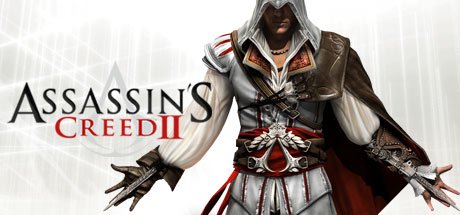
My Facebook bio has quoted the Assassin motto for years: nothing is true, everything is permitted. I did not pick that line from a poster. I picked it up in Florence, in 2009, standing on a rooftop next to a charming idiot named Ezio Auditore who was about to become the best protagonist this series ever produced. This is the retrospective I have been waiting to write.
By Ruan Martini, Daily Checkpoint, November 1, 2026
Let me set the scene properly, because people forget what the first Assassin’s Creed actually was. The 2007 original was a beautiful tech demo wearing a game’s clothes. One city repeated three times, the same handful of missions photocopied until your eyes glazed over, and a hero, Altaïr, with all the warmth of a parking ticket. It sold on promise. Everybody could see the idea was huge. Nobody had built the game around it yet.
Then, on November 17, 2009, Ubisoft Montreal released Assassin’s Creed II, and it is not an exaggeration to call it one of the great course corrections in gaming history. Same bones, parkour, hidden blade, historical tourism, and absolutely everything else rebuilt. A hero with a pulse. Cities with souls. Missions that changed shape every hour. It received universal critical acclaim, it is still cited as one of the best games ever made, and it sold more than nine million copies within six months, which is what a game does when it stops being a promise and starts being a phenomenon. Seventeen years and roughly a dozen sequels later, I still judge every Assassin’s Creed against this one. Most of them lose.
Florence, Venice, and a Tour Guide Named Leonardo
The setting does half the work, and Ubisoft knew it. Renaissance Italy, 1476 to 1499, the exact moment in history when art, money, science and murder were all booming industries at the same time. You start in Florence, all red roofs and Medici money, move through the Tuscan countryside and your family’s little town of Monteriggioni, swing through San Gimignano and Forlì, and end up in Venice for a finale built around carnival masks and canals. Every one of those places was recreated with an obsessive eye, and every one of them plays differently. Florence is a parkour playground. Venice makes you think in boats and bridges. It never feels like one map with the names swapped, which, and I say this with love, is a trick some later games in this very series could have studied harder.
And then there is the greatest supporting character casting in the history of this medium: Leonardo da Vinci is your gadget guy. History’s most famous genius is in this game building your toys, decoding your treasure maps and getting adorably excited about both. He upgrades your hidden blades, gives you a second one so Ezio can do the famous double assassination, hands you a poison blade, and builds you an actual flying machine for one glorious mission over Venice. None of this is history, all of it is perfect, and the friendship between Ezio and Leonardo is the warm heart of the whole game. Every time Leonardo hugs Ezio like an excited uncle, the game reminds you that underneath the conspiracy nonsense, this is a story about people who love each other. That should not work in a game about stabbing. It works completely.
A Revenge Story That Grows Up in Front of You
Here is the thing no other game in the series has matched: Ezio is the only protagonist we follow for an entire life. Assassin’s Creed II opens with his birth. Literally, the first scene. You meet him as a spoiled, charming Florentine teenager who races his brother across rooftops and throws rocks at a rival’s house, and within hours you watch his father and two of his brothers hang in a public square because of a betrayal. The revenge plot that follows is not a weekend project. It runs for over twenty years of story time, and Ezio changes across it, from a boy swinging on anger to a man who, at the end, stands in front of the person he has hunted his whole life and makes a choice that the angry kid from Florence never could have made. I will not spoil a 2009 game’s ending in detail, but the restraint in that final scene is the moment the series grew up.
Ubisoft clearly understood what it had, because Ezio got two direct sequels, Brotherhood in 2010 and Revelations in 2011, which carried him all the way to old age and an actual ending. Birth to death, one character, three games. In an industry that usually milks a mascot until the milk turns to dust, that completeness is rare, and it is a huge part of why Ezio sits on a shelf that no later Assassin, not Bayek, not Kassandra, not Eivor, has reached. Those are good characters. Ezio is a whole life.
What II Fixed, Item by Item
It is worth listing what Ubisoft actually changed, because the first game was criticized for exactly these things and the sequel reads like a reply written in code. Mission variety was the headline complaint in 2007, so II throws everything at you: races, beat ups, assassinations with conditions, carriage chases, a carnival infiltration, a flying machine assault, tomb raiding through six Assassin crypts that play like pure parkour puzzle boxes. Repetition was the disease and variety was the cure, administered in bulk.
Then the systems. Ezio can swim, which sounds small until you remember Altaïr drowned in ankle deep water like a dropped phone. There is a notoriety system, where public crimes raise your profile until guards hunt you, and you manage it by tearing down wanted posters, bribing heralds or quietly removing witnesses, a loop so good that later games kept recycling it. There is an economy: shops, tailors, doctors, armor sets, dye colors, paintings for the villa. There are factions to hire on the street, courtesans to distract guards, thieves to lure them away, mercenaries to start your fights for you. And there are two hidden blades, the series’ most famous image, Ezio standing in a crowd with a blade in each wrist, born in this game because Leonardo looked at one blade and asked the question every engineer should ask: why not both?
None of these additions is a revolution alone. Stacked together, they turned a rigid little stealth toy into a living sandbox, and they became the template the whole genre, not just this series, spent the next decade copying.
The Cozy Part Nobody Puts on the Box
Now the part I actually want to talk about, because it explains why I still reinstall this game. Assassin’s Creed II is, underneath everything, a deeply comfortable game.
It hands you Monteriggioni, your family’s town, and lets you pour money into it. Rebuild the shops, fix the church, reopen the mines, watch the place fill with people and income that flows back into your pocket. It is a little economy of care, and it turns the map into a home instead of a checklist. The game also lets you breathe. Climb a tower because the view is nice. Collect the feathers scattered across the rooftops, a side activity that sounds like filler until you learn Ezio gathers them for his little brother Petruccio, the one he could not save, and suddenly every feather is a gut punch you chose to pick up. Chase the hidden glyphs and solve Subject 16’s puzzles if your brain wants work. Or do none of it and ride between cities at golden hour doing absolutely nothing, which this game, to its eternal credit, fully supports.
And here is the sentence that matters to me in 2026: Assassin’s Creed II respects your ability and your time. It is not a punishing game. It does not want you dead, it wants you flowing. The combat is generous, the climbing is kind, the difficulty curve treats you like a guest instead of an opponent. Modern gaming has a whole genre built on the idea that fun must be earned through suffering, and I am not naming names, but sometimes a man wants to be a Renaissance superhero after a long day at work, and Ezio’s Italy has never once told him no. That is a design philosophy worth defending, and it is why this game, cozy in the way our San Andreas retrospective (https://thedailycheckpoint.com/gta-san-andreas-retrospective/) talked about, stays installed on my machines while harder, louder games get deleted.
The One Black Mark, Because We Keep Receipts Here
Honesty section, as always. The PC version launched in March 2010 carrying one of the most hated ideas in PC gaming history: always online DRM that required a constant internet connection for a single player game, and kicked you out when the connection blinked. Players revolted, critics punished it, and Ubisoft eventually removed the requirement permanently. It deserves its place in this article because it is the one moment the Ezio era treated its players like suspects, and because the industry learned the lesson so well that the whole episode reads like a museum piece now. The game survived it, obviously. Nine million copies in six months was the verdict, and the verdict was delivered while the DRM fight was still raging, which tells you how strong the game underneath actually was.
The Ending That Broke Everybody’s Brain in 2009
We have to talk about the ending, carefully, because it is the most 2009 ending imaginable and people are still arguing about it in comment sections today. Underneath Ezio’s revenge story, this game runs a second plot: Desmond Miles, the modern day bartender turned lab rat, is reliving Ezio’s memories to learn the location of a Vault built by the First Civilization, the ancient race that made humanity and left doomsday machinery lying around the planet. Ezio’s entire life, the game slowly reveals, has been a delivery mechanism. He is a prophet carrying a message he does not understand, for a man who will not be born for another five hundred years.
And then the game does the thing. Ezio finally opens the Vault, and the hologram waiting inside, the First Civilization member Minerva, ignores him completely and speaks past him, by name, to Desmond, to you, the player holding the controller in 2009. The fourth wall does not crack, it gets politely demolished by a goddess in a tomb under the Vatican. I remember the credits rolling and just sitting there. Games simply did not do that then, address the player through the protagonist like the protagonist was a telephone. You can draw a straight line from that one scene to every meta story trick the industry has tried since, and most of them are still chasing the chill that scene delivered by accident of perfect timing.
One more legacy item, and it is my favorite. The score, by Jesper Kyd, contains a track called Ezio’s Family. If you have played any Assassin’s Creed in the last fifteen years, you already know it, because that melody became the musical identity of the entire franchise, rearranged and reused across sequel after sequel, era after era. A theme written for one fictional family in Florence ended up branding a series that has since sailed to Egypt, Greece, Baghdad and Japan. Ezio is gone from the box art. His family’s song is still the first thing you hear. That is what a high point looks like when it refuses to leave.
Where It Stands Now
You can play Assassin’s Creed II today as part of The Ezio Collection, the remastered trilogy that launched on PlayStation 4 and Xbox One on November 15, 2016 and reached Nintendo Switch on February 17, 2022. It holds up. The cities are smaller than the oceans of map the series sails now, the combat is simpler, and none of that matters, because the thing this game does best, making you care about a man and his family inside a living piece of history, is the thing the giant versions keep almost doing.
The series after Ezio got bigger, longer and louder. It became an RPG, it became a hundred hour checklist with wings, and some of those games are genuinely good. But the balance point, the exact place where story, city, character and freedom all weighed the same, is 2009, Florence, a kid on a rooftop who has no idea what is coming for him.
Nothing is true. Everything is permitted. And seventeen years later, Ezio Auditore da Firenze is still the standard. Requiescat in pace.
Sources
Wikipedia, “Assassin’s Creed II”: November 17, 2009 North American launch on PlayStation 3 and Xbox 360, PC release in March 2010, universal critical acclaim, more than nine million copies sold within six months, The Ezio Collection dates for PS4, Xbox One and Switch.
Ubisoft and Steam store materials for Assassin’s Creed II: Ezio Auditore da Firenze, the Renaissance setting, Florence, Venice, Monteriggioni, San Gimignano and Forlì, Leonardo da Vinci.
Ubisoft, The Ezio Collection (November 15, 2016): remastered Assassin’s Creed II, Brotherhood and Revelations.
Contemporary coverage of the PC launch (2010): the always online DRM controversy and its later permanent removal.