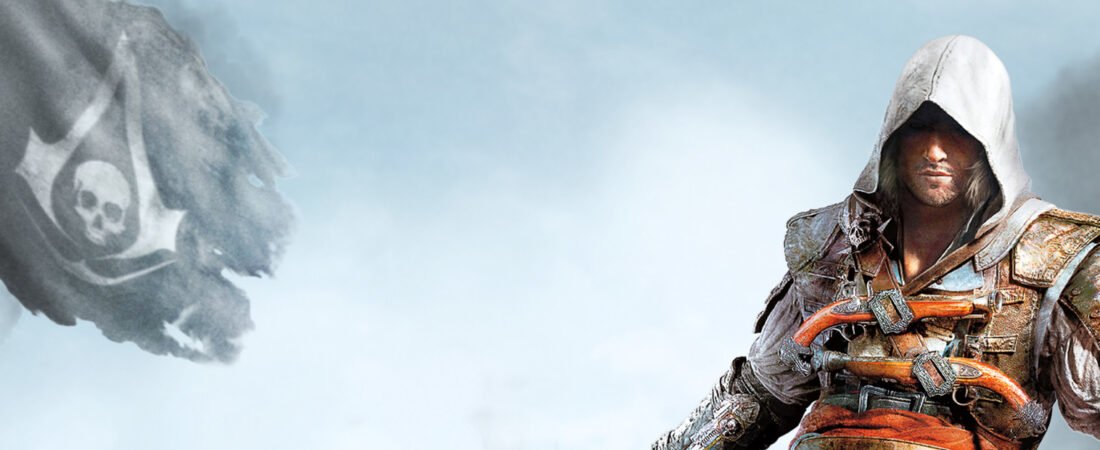
Every few years, Ubisoft releases a new Assassin’s Creed and the internet immediately asks the same question: is it as good as Black Flag? Thirteen years of sequels, reboots and RPG detours later, the pirate game is still the measuring stick. That is not nostalgia. That is a scoreboard.
By Ruan Martini, Daily Checkpoint, November 1, 2026
Let me set the scene, because people forget how weird the setup was. It is 2013. Assassin’s Creed III had just split the fanbase down the middle, with a slow opening, a divisive protagonist and an ending that left long time players staring at the screen like the TV owed them money. The one part everybody agreed on, the part players kept replaying and posting clips of, was the naval combat. Those ship missions were supposed to be a side dish. They turned out to be the best thing on the plate.
So Ubisoft Montreal did the smartest thing a big studio can do. It looked at the data, looked at the fan feedback, and built the entire next game around the side dish. The promise was bold: a full pirate epic set in the Golden Age of Piracy, from 1715 to 1722, where you were not really an Assassin at all. You were Edward Kenway, a Welsh privateer turned pirate, a charming disaster of a man who falls into the Assassin and Templar war by accident, steals a dead man’s robes, and decides to play along because there might be money in it.
Read that pitch again. In a series built on hooded true believers reciting the creed, the hero of Black Flag joins the ancient secret war for the paycheck. I loved it instantly. Still do.
The Jackdaw Is the Real Protagonist
Here is the thing nobody at Ubisoft could have fully predicted: the star of Black Flag is not Edward. It is his ship.
The Jackdaw, your brig, is a home, a weapon, a wallet and a character all at once. You upgrade her hull, her cannons, her swivel guns, her mortar. You hire crew by rescuing pirates from the gallows and by boarding ships and giving the survivors a career change. You hunt treasure maps, dive to shipwrecks with a diving bell, harpoon sharks and whales, assault naval forts, and chase down legendary ships that will absolutely delete you if you show up underprepared. Ask me how I know. Ask the bottom of the Caribbean, where several of my confident early game Jackdaws are resting.
The genius move was the flow. There is no loading screen between the sailing and the rest of the game. You spot a Spanish galleon on the horizon, you trade cannon fire until she is crippled, you swing across on a rope, you fight the captain on his own deck, and then you decide his ship’s fate: send it to your fleet, use it to repair the Jackdaw, or wave goodbye to the crew and sink her. That loop, sail, cripple, board, decide, never gets old. I have started Black Flag playthroughs purely to do that loop for a weekend, with zero intention of touching the main story. The main story can wait. There is a man o’ war out there with my name on its cargo hold.
And then there are the shanties. Your crew sings while you sail, real historical sea songs that you collect like trading cards by chasing floating pages through port towns. Nothing in games before or since has matched the feeling of your whole crew belting out a song while the sun sets over the water and a storm builds on the horizon. Ubisoft later published official albums of those shanties because fans would not stop asking. A stealth game about hooded killers accidentally produced the best pirate music playlist in gaming. Incredible scenes.
A Pirate Story That Actually Lands
Underneath the sailing, Black Flag quietly tells the best story the series had managed since Ezio. Edward is not a hero. He is a talented, selfish young man who left his wife behind in Wales chasing gold, and the game spends thirty hours slowly showing him the bill for that choice. The pirates around him are real historical figures, Edward Thatch, the man the world calls Blackbeard, Charles Vane, Calico Jack Rackham, Anne Bonny, Mary Read, Benjamin Hornigold, and one by one the golden age ends around them. They die, they sell out, they hang, they drink themselves into the floor of a Nassau tavern while the dream rots.
The last stretch of this game, where an older, emptier Edward looks at everything the gold cost him, hits harder than any hidden blade ever has. And because this is a prequel, all of it is quietly load bearing for the rest of the saga: Edward is the father of Haytham Kenway and the grandfather of Connor, so the charming pirate chasing coin in 1715 is the first domino in the whole American storyline.
Now, honesty hour, because this is a retrospective and not a commercial. The actual Assassin’s Creed parts of Black Flag are the weakest parts of Black Flag. The tailing missions. The eavesdropping missions. Follow this man, stay out of sight, instant fail if a guard looks at you funny. And the modern day sections, where you play a silent employee wandering the offices of Abstergo Entertainment, a game studio making pirate games inside your pirate game, are cute exactly once. The joke writes itself and every fan has made it: the greatest pirate game ever made keeps stopping so it can be an Assassin’s Creed game. The pirate was carrying the franchise on his back, and the franchise kept handing him fetch quests.
Even with those warts, look at the receipts.
The Receipts: Acclaim, Awards and 11 Million Pirates
Black Flag launched on October 29, 2013 for PlayStation 3, Xbox 360 and Wii U, then arrived a month later on PlayStation 4, Xbox One and PC, right in the launch window of the new consoles. Reviews were glowing where it mattered: critics praised the open world, the side content, the graphics and above all the naval combat, and Ubisoft was able to boast that it was the top rated new generation title of that holiday season. It won Best Action Adventure Game at the Spike VGX awards in 2013. Two days after launch, IGN ranked it the second best game in the entire series, behind only Assassin’s Creed II, which in this fanbase is basically being knighted.
The money showed up too. In the United Kingdom it was the best selling game in the country in its first week, ahead of Battlefield 4, even though its opening week was down compared to Assassin’s Creed III, something Ubisoft pinned on players holding off during the jump to new consoles. In the United States it was the third best selling game of November 2013 according to NPD, sitting behind only Call of Duty: Ghosts and Battlefield 4, which is not bad company for a man in a hood shouting orders at a sail. By May 2014, Ubisoft’s own financial report confirmed that Black Flag had shipped over 11 million copies including digital sales. Eleven million. For the sixth entry in a yearly series that half the internet claimed to be tired of.
The afterlife kept the legend fed. The Freedom Cry expansion put Edward’s quartermaster Adéwalé in the lead for a shorter, heavier story about slavery in the Caribbean, first as DLC in December 2013 and later as a standalone release. Ubisoft even tried to spin the naval combat into its own game: Skull and Bones, built by Ubisoft Singapore, spent roughly a decade in development hell before finally launching in 2024 to the kind of reception you politely describe as a shrug. An entire standalone pirate game, built by hundreds of people, could not out sail the side mode of a 2013 Assassin’s Creed. That tells you everything about what Montreal caught in a bottle here.
Where It Stands Now: The Remake Era
In December 2019 the original arrived on Nintendo Switch as part of The Rebel Collection, bundled with Assassin’s Creed Rogue, so the pirate became portable. But the real headline is recent. After years of reports, Ubisoft officially acknowledged a full remake in March 2026, and Assassin’s Creed Black Flag Resynced launched on July 9, 2026 for PlayStation 5, PC and Xbox Series X and S. It is a ground up remake led by Ubisoft Singapore on the newest version of the Anvil engine, with roughly six hours of additional content, new characters, and Matt Ryan back in the booth as Edward. Ubisoft even fixed the ancient complaint, removing the instant fail states from the tailing and eavesdropping missions, which might be the most fan service sentence ever typed. Reviewers received it warmly, and in its October 29, 2026 franchise update, Ubisoft said no further remakes are in active development, which makes Black Flag, once again, the one that got the special treatment.
My take is simple. Studios do not remake the sixth best game in a series. They remake the one people measure everything else against. The original Black Flag is cheap everywhere, runs great, and still contains the single best open world loop Ubisoft has ever shipped. If you somehow skipped it, fix that before you play anything else in this series. Leave the gun, take the Jackdaw. Hoist the black flag, put the shanties on, and go be the reason the Spanish fleet files insurance claims.
Sources
Ubisoft full year 2013 to 2014 financial results, May 2014 (over 11 million copies shipped including digital sales), reported by Engadget, Game Informer and Nintendo Everything.
Assassin’s Creed IV: Black Flag release dates, platform history and critical reception summary, Wikipedia, cross checked against Ubisoft’s original 2013 announcements.
United Kingdom first week sales and the comparison with Assassin’s Creed III, plus November 2013 NPD rankings in the United States, reported via Wikipedia’s sales summary and contemporary chart coverage.
Spike VGX 2013, Best Action Adventure Game award, and IGN’s series ranking placing Black Flag second behind Assassin’s Creed II, reported at launch in November and December 2013.
Assassin’s Creed Black Flag Resynced development, July 9, 2026 release and remake details, Wikipedia and Wccftech’s coverage roundup; Ubisoft franchise updates of March 2026 and October 29, 2026, reported by MobileSyrup and Games2Egypt.