By Ruan Martini, Daily Checkpoint
Ryu Ga Gotoku Studio looked at its own formula and got bored, and I mean that as the highest compliment I own. This is the team behind Like a Dragon, the people who turned one fictional Tokyo district into a second home for millions of us. For their next trick, they are not making another Kamurocho game. They are making a crime saga that starts in 1915, ends in 1965, crosses five Japanese cities, splits your controller into two independent fists, hires Snoop Dogg as a smuggler, and then, because apparently that was not enough chaos for one project, it puts a music management sim in the middle of it. Stranger Than Heaven launches on January 15, 2027, and I have been quietly obsessed with it since it was a nameless teaser called Project Century.
Let me do the housekeeping first, then the fun parts, because this game collects wild facts the way my Steam library collects unplayed RPGs.
The confirmed pile
Everything in this section comes from Sega, RGG Studio, or the official storefronts, on the record.
The game is a single player action adventure for PlayStation 5, Xbox Series X|S and PC (Steam and the Microsoft Store). It lands in Xbox Game Pass on day one, it supports Xbox Play Anywhere (buy once, play on console and PC), and the standard edition costs $69.99 in the US. Pre-ordering gets you a weapon called the Dosu: Kagekiri. Gematsu’s report on Sega’s announcement adds digital Deluxe editions and physical editions, including a Collector’s Edition with a 12 inch vinyl of the soundtrack, a SteelBook and the Deluxe upgrade content. Sega also says this is already the most wishlisted RGG Studio game ever before launch, which, given how this studio’s fanbase behaves, I fully believe.
One small storefront quirk before anyone emails me: Steam’s page has shown January 14 in some regions. That is a timezone display thing on the store’s side. Sega, Xbox and PlayStation all say January 15, 2027, so January 15 is the date I am putting on the calendar, in pen.
One kid, five Japans
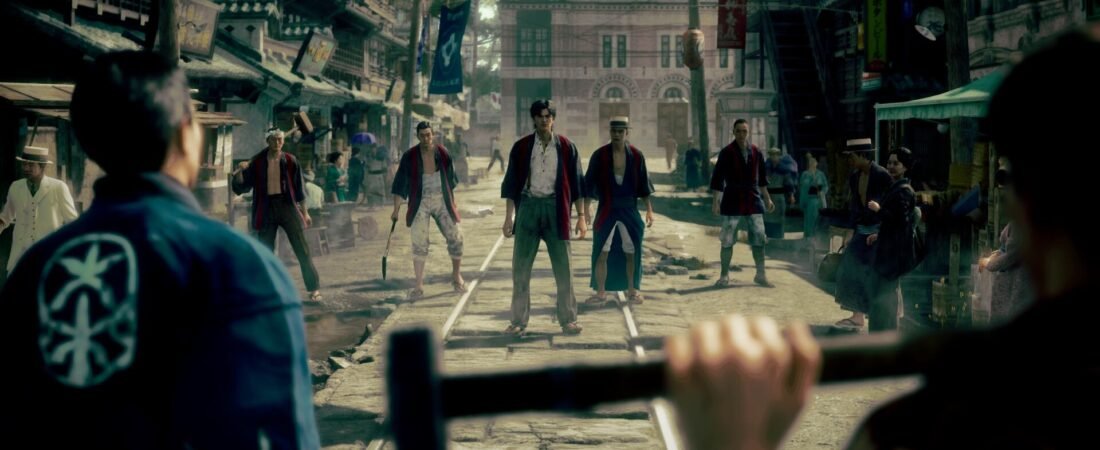
You play Makoto Daito, played by Yu Shirota. He is born in San Francisco to an American father and a Japanese mother, and he belongs fully to neither place, which is the wound the whole game keeps pressing on. The opening act, shown in October’s “Act 1: Kokura” story trailer, has a young Makoto sneaking aboard a ship run by a merchant named Orpheus and crossing the Pacific to his mother’s homeland, looking for a life. Game Rant’s hands-on with the prologue adds a nastier detail: back in America, Makoto has also been wrongfully accused of murder, so this is not exactly a vacation.
From there, the story walks through five chapters, and Sega’s own descriptions of them are worth reading slowly:
- 1915, Kokura, Fukuoka. An industrial town built around one of the world’s largest foundries, smoke in the air and work in everybody’s hands.
- 1929, Kure, Hiroshima. A port dominated by Japan’s largest naval arsenal, with yakuza organizations woven into daily life. This is where the crime half of the story grows teeth.
- 1943, Minami, Osaka. The biggest entertainment district in western Japan, bright lights running against the tension of a world at war. This is where the show business half blooms.
- 1951, Atami, Shizuoka. A postwar seaside resort town, all tourism and rebuilding.
- 1965, Shinjuku, Tokyo. The finale lands in the pleasure district that RGG fans will read as Kamurocho in its younger, wilder years, and the studio has teased that a major secret waits there.
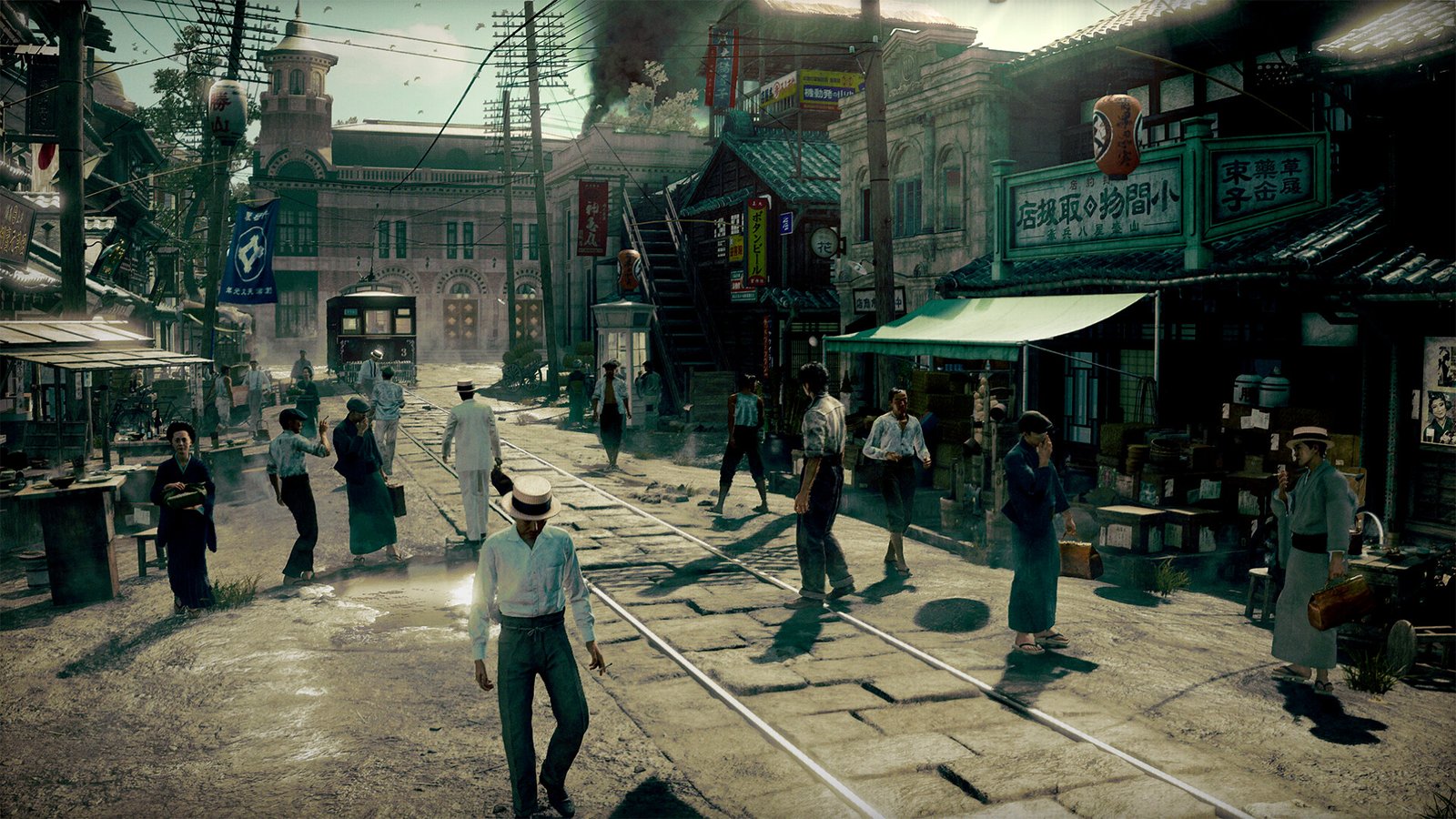
Director Mikinobu Abe has been refreshingly honest about the history part. In an interview covered by TechRadar, he said the team did difficult research and visited the real cities, but that “historical accuracy wasn’t the goal from the very beginning,” and that the cities carry a lot of fiction. Sega’s own framing calls this a version of Japan that might have existed. Good. I do not need a documentary. I need Kokura to feel like 1915 felt in people’s bones, and every hands-on report so far says the atmosphere is doing exactly that.
About that Tojo Clan question
Time for the label discipline, because this is where the internet keeps sprinting ahead of the facts. Sega’s official materials position the game inside the Like a Dragon universe, generations before Kiryu: it depicts the origins of the Tojo Clan, and Makoto ends up at the root of it as its founder. That much is stated by the studio itself, not guessed by fans.
What the studio also said, loudly and more than once, is that this is not a nostalgia delivery service. Studio head Masayoshi Yokoyama has clarified that the game is not built as a tour of the series’ past, it will not trot out younger versions of familiar Like a Dragon characters, and it does not require any homework to play. New players are the target as much as veterans. Yokoyama also revealed the saga was once planned as a trilogy before the team decided one single game should carry all fifty years, with the main story taking six to seven years to develop. Sit with that for a second. Six to seven years of writing, for one man’s fake life. RGG does not do small.
Community speculation beyond that (who is secretly whose grandfather, which background face becomes a series legend) is exactly that: speculation. I will enjoy it at a distance and print none of it as fact.
Your left hand has its own job now
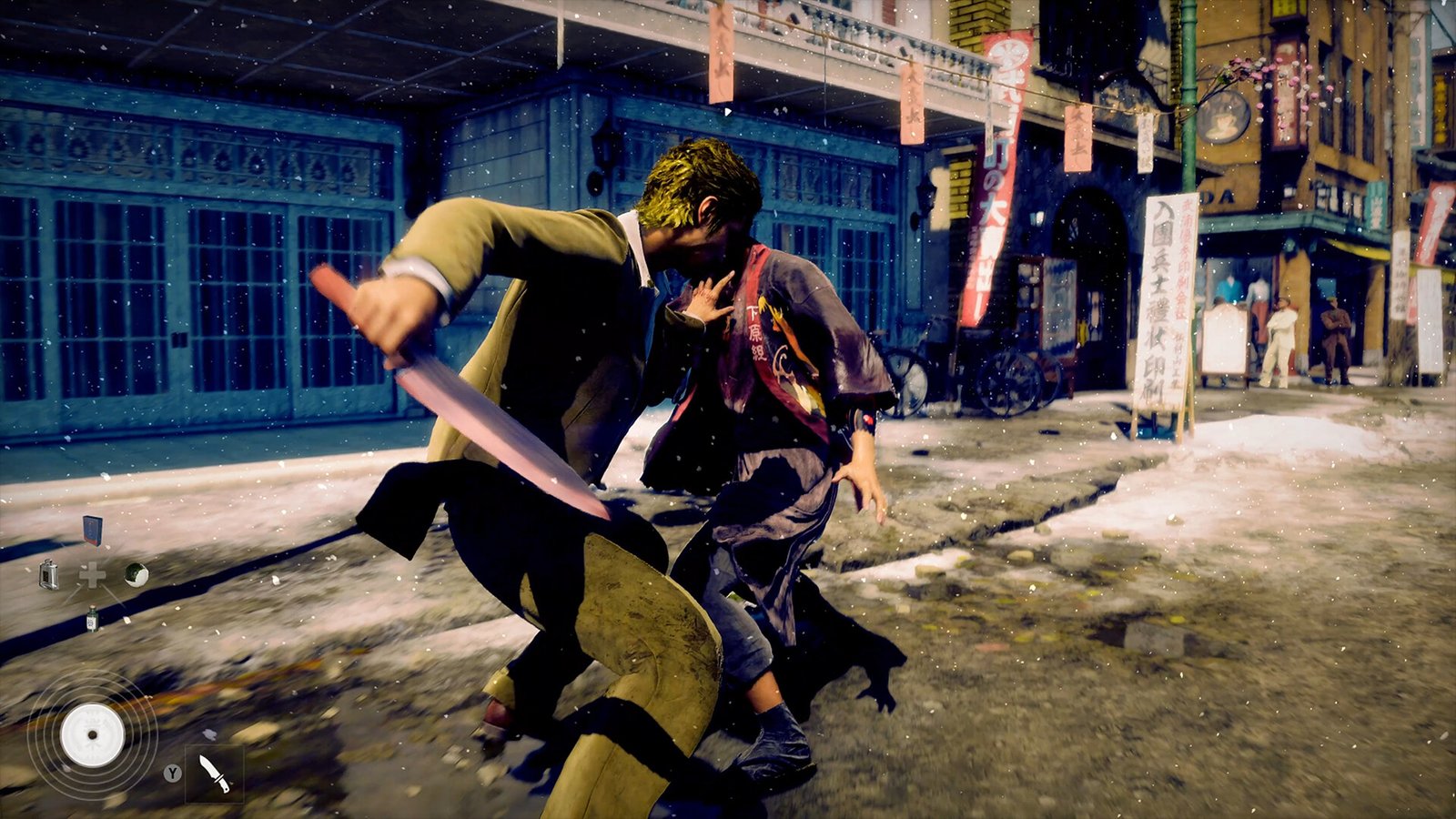
Combat is where Stranger Than Heaven stops sounding like Yakuza in a period costume. Makoto’s left and right sides are controlled independently. The left bumper and trigger run his left side, the right bumper and trigger run his right side. Hold a knife in one hand and that hand stabs, while the empty hand still punches, grabs and shoves. Weapons (knives, hammers, crowbars and more) have different reach and speed, they can be upgraded, and blocking is directional: you raise the side the attack is coming from, and a well timed parry from the correct side opens the enemy up. There are no Heat Actions this time, per Impulse Gamer’s hands-on. In their place: finishers, tackles, and the environment itself as a weapon.
Press who played the demo at Summer Game Fest, Gamescom and TGS 2026 agree on the shape of it, and these are impressions, so treat them as impressions. Anime News Network’s verdict was blunt: you cannot play this like a Yakuza game. Button mashing dies fast, enemies hit hard, stamina hides in a ring of “noise” around your health instead of a tidy bar, and fights feel closer to a tense duel than a power fantasy. Game Rant called it the hardest RGG combat to master and meant it as praise. GamingTrend’s writer walked in having played every Yakuza and Judgment game and walked out humbled. SavePoint Gaming liked the ambition and flagged that the defensive controls can feel clumsy in the fastest fights, which is the kind of honest friction I want flagged before launch rather than after.
My read, from everything shown: this is RGG deliberately making combat slower, meaner and more personal, because Makoto is not the Dragon of Dojima. He is a kid learning to survive. If the final game keeps the demo’s nerve, some Like a Dragon players are going to bounce off it in week one and then quietly come back in week three. I have seen this movie. It ends with everyone calling it a classic.
Half crime saga, half band manager
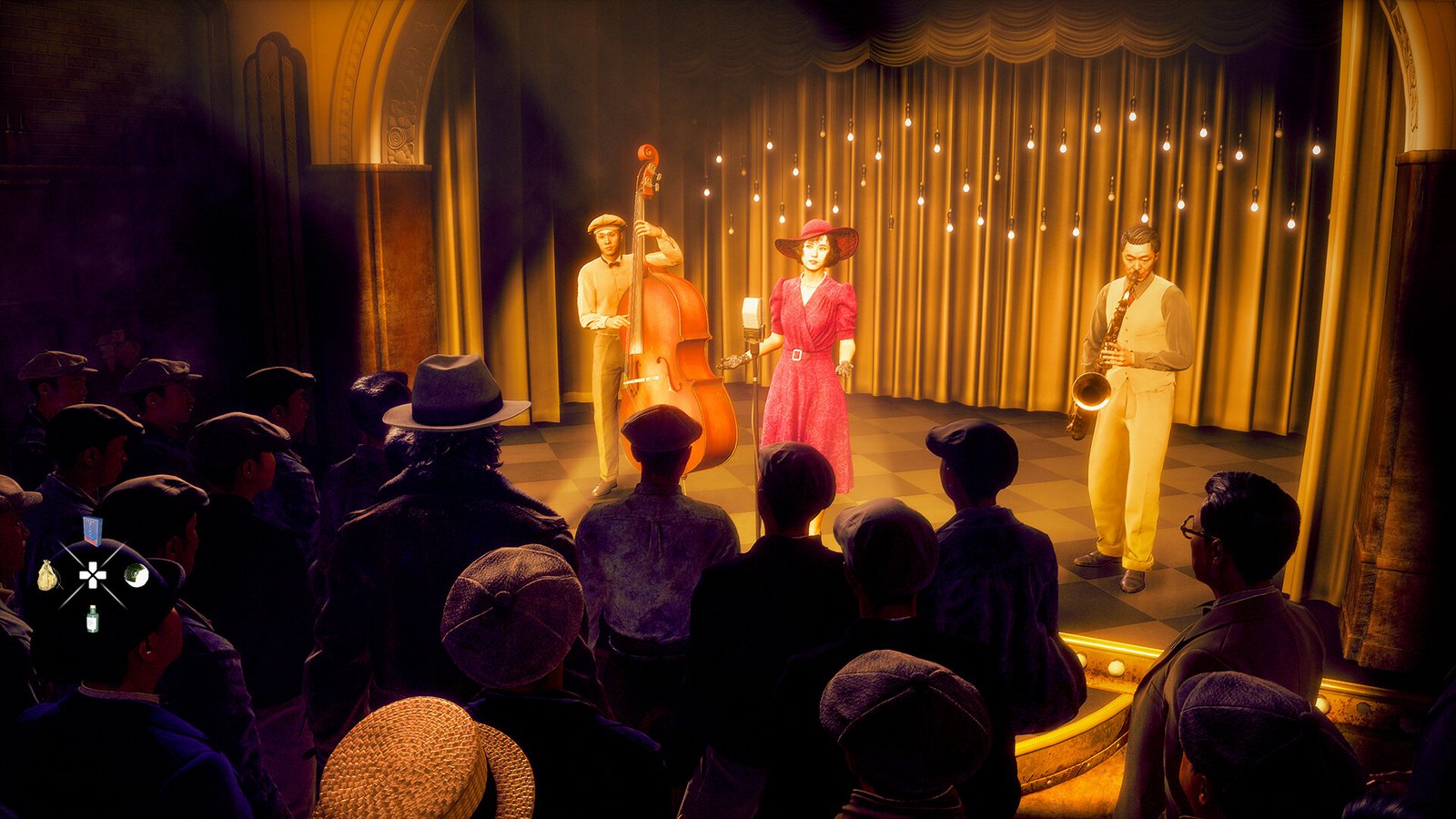
Now the part that makes this game genuinely strange, stated proudly in its own title. Makoto hears music in the world. As you explore, you collect everyday sounds and store them as recordings, then work with composers to turn those sounds into original songs. Around that sits a full show business layer: recruit musicians and singers off the street, pick setlists, arrange the band, assign performers, design the stage production down to the lighting, paste posters around town to pull a crowd, and balance the books so the show makes more than it costs. Sega gave this system its own “Showbiz In-Depth Look” video in September, separate from the combat reveals, which tells you how seriously the studio takes it.
Director Abe explained the logic in interviews, and it is better than any marketing line: for a kid who cannot fully speak the language of the country he just landed in, music is the first way Makoto can actually communicate with people, and later it becomes how he survives and earns. The game even ships with a single unified voice track, Japanese and English mixed by character and context instead of separate dubs, because that is how Makoto’s world would actually sound. That detail alone tells me the team thought about this man’s life harder than most studios think about their entire franchises.
The cast is a fever dream, and the studio knows it
Deep breath. Snoop Dogg plays Orpheus, the merchant who changes Makoto’s life, and Yokoyama has said they always had Snoop in mind for it. Snoop also performs the main theme, “Stranger Than Heaven,” alongside singer Tori Kelly (who plays Suzy Day, a singer chasing a career in Japan), Japanese star Ado (playing Keiko Shirai, billed as the diva of wartime Osaka, with an original character design that protects Ado’s famously secret identity), and Satoshi Fujihara of Official Hige Dandism, who also plays Takashi, a young yakuza and gifted pianist. Dean Fujioka plays Yu Shinjo, Makoto’s best friend and rival, another mixed heritage kid. This is not stunt casting sprinkled on top. Music is the plot, so they cast musicians as the plot.
Then come the two names that made the whole internet sit up. The late actor Bunta Sugawara, the face of the classic Battles Without Honor and Humanity yakuza films, appears as Kure boss Genzo Iwaki, built from archival footage and photographs with his family’s formal consent and Toei’s cooperation, voiced by Takashi Ukaji, who knew him personally. And Tupac Shakur appears as a character named Amaru, a man in hiding in Japan, with the permission and ongoing supervision of his estate. RGG has stated, clearly, that no AI was used to build either likeness and no AI will fake their voices; Tupac’s voice actor has not even been named yet. Fan reaction to Tupac’s inclusion has been genuinely mixed, admiration and discomfort in the same threads, and I am not going to pretend otherwise in a preview. What I will say: the studio went through the families, in the open, and put the rules in writing before launch. Judge the result in January, with the full context in hand.
Oh, and because 2026 was not done being weird: Sega and Netflix announced in September that a live action Stranger Than Heaven film is in development, produced by Sega’s Toru Nakahara. No cast, no date. A film adaptation of a game that has not launched yet. Confidence or madness. Possibly both. Very RGG.
What we still do not know
Honest inventory time, because a preview that only sells you the sizzle is an ad wearing a trench coat.
- Total length. Fifty years of story, five cities sized roughly like Like a Dragon districts (with more enterable interiors and fewer towers, per Yokoyama), and no official hour count anywhere. Anyone quoting you a number today is inventing it.
- The era split. Demos and previews covered Kokura, Kure and Osaka in depth. Atami and the 1965 finale are still mostly silhouettes, and how your older Makoto plays differently from the kid is unshown.
- Amaru. Tupac’s character is confirmed, his role in the plot is not. Sega says details come later.
- The small print. No announced file size, no Switch version announced, and the substories are said to carry a different tone this time, in a historical game with fewer minigames than Like a Dragon usually packs. How that balance lands is a launch week question.
- Whether the defense grows on people. The one consistent hands-on complaint. RGG has time to tune it, and no promise has been made either way.
January 15 is a knife fight
Now the scheduling comedy, which is why I wanted to write this piece in October and not December. Stranger Than Heaven launches on January 15, 2027. So does Ananta, NetEase’s free to play open world RPG, a game I already covered on this site because it had the nerve to park itself eight weeks behind GTA 6. Same day. Same genre neighborhood. Two studios staring at each other across the calendar like it is high noon.
Look closer, though, and the fight is stranger than the headline. Ananta is free, lives on phones as well as PS5 and PC, and wants your daily hours for years. Stranger Than Heaven is a 70 dollar, single player, one and done saga, the kind of game you finish and think about for a month. They barely compete for the same wallet. What they compete for is the same January conversation, the same front pages, the same first weekend. And Stranger Than Heaven holds one outrageous card in that fight: Game Pass, day one. The scariest price tag on the weirdest game of the month simply evaporates for subscribers. Curious but cautious is exactly the audience a fifty year yakuza opera with a band manager inside needs, and Microsoft just removed their excuse.
My take? Ananta wins the downloads, because free is free and 17 million people already pre-registered for it. Stranger Than Heaven wins the arguments, because nobody argues about a game for a decade unless it took real swings, and this thing is swinging at everything: history, combat, casting, genre. February then shows up with its own pile-up two weeks later and eats whatever oxygen is left, so both of these games have about fourteen days to become somebody’s personality. I know which one is becoming mine. I will be the guy in 1915 Kokura, losing fistfights because I pressed the wrong shoulder button, running a jazz band out of a port town, living one borrowed life across fifty years. January 15. Pen on the calendar. See you there.
Sources
- Sega and Ryu Ga Gotoku Studio, official Stranger Than Heaven site and Steam store page (platforms, January 15, 2027 date, $69.99 standard edition price, Dosu: Kagekiri pre-order bonus, Play Anywhere, game description)
- Microsoft, Xbox store page for Stranger Than Heaven (day one on Game Pass, January 15, 2027, editions)
- Gematsu, “Stranger Than Heaven launches January 15, 2027” (release announcement, Deluxe and Collector’s editions, vinyl and SteelBook details, Tupac reveal)
- Sega, “Act 1: Kokura” story trailer coverage via Hypebeast and RPGamer, October 2026 (five era structure, trailer series)
- Xbox Wire, “Xbox Presents: A Special Look at Stranger Than Heaven” and the September 2026 cast profiles (combat system, show business systems, sound collecting, cast list)
- Final Weapon, “Stranger Than Heaven Details Key Characters and Shares Showbiz In-Depth Look Video,” September 2026 (character profiles, Sugawara and Tupac likeness terms, most wishlisted RGG game)
- Game Rant, hands-on preview, October 21, 2026 (prologue details, wrongful murder accusation, free roam structure, show business play impressions)
- Anime News Network, hands-on preview, Summer Game Fest 2026 (left and right side controls, parry direction, stamina noise, boss encounters)
- GamingTrend and Impulse Gamer, hands-on combat previews, 2026 (weapon handling, no Heat Actions, difficulty impressions); SavePoint Gaming, Gamescom 2026 preview (defensive control criticism)
- TechRadar interview coverage, October 2026 (director Mikinobu Abe on research and historical accuracy); One More Game, TGS 2026 roundtable (Sakamoto, Horii, Abe and Kanaya on identity and belonging); Automaton, Yokoyama interviews (trilogy plan, six to seven year story development, no returning younger characters, no generative AI voices)
- Wikipedia, “Stranger Than Heaven” (Project Century announcement at The Game Awards 2024, development credits, Netflix film announcement)
- Daily Checkpoint, “Ananta Is Free, It Is Anime GTA, and It Launches Eight Weeks After GTA 6” (Ananta’s January 15, 2027 date, platforms and pre-registration figures)
The Checkpoint Poll
Leave a Reply