By Ruan Martini, Daily Checkpoint
Every GTA has a personality. San Andreas is the friend who shows up with a jetpack and three cities worth of chaos. GTA V is the polished blockbuster. GTA IV is the cousin who sits in the corner of the party, drinks quietly, and tells you a war story that ruins your night in the best possible way. It is the most argued-about game in the whole series, the one with a 98 on Metacritic and a fanbase that has been fighting about it for eighteen years. Critics put it next to Ocarina of Time. A loud chunk of players put it next to a screensaver. Both sides have receipts, and that fight is exactly why this game still matters, especially now, with GTA 6 weeks away and everybody suddenly remembering that Rockstar once chose sad over silly on purpose.
The short version
Release: April 29, 2008 on PlayStation 3 and Xbox 360. PC followed on December 2, 2008.
Developer: Rockstar North, on the then-new RAGE engine, with NaturalMotion’s Euphoria animation tech.
The pitch, in Rockstar’s own summary: “What does the American Dream mean today?”
Launch: about 3.6 million copies and $310 million in the first 24 hours, roughly 6 million copies and over $500 million in week one (Take-Two).
Reviews: 98 on Metacritic for both console versions. The user score sits at 8.4, which tells its own story.
Sales: over 25 million copies by July 2013, the last firm number Take-Two put its name on.
Episodes: The Lost and Damned (February 17, 2009) and The Ballad of Gay Tony (October 29, 2009), Xbox 360 first.
The week it ate entertainment
People forget how big April 2008 was. Take-Two announced that GTA IV sold through about 3.6 million copies on day one, roughly $310 million, nearly double Halo 3’s day-one number, and then crossed $500 million in its first week on about 6 million copies. The company’s chairman, Strauss Zelnick, called it the largest launch in the history of interactive entertainment and said the numbers surpassed any movie or music launch to date. Guinness World Records certified three records on May 13, 2008: highest grossing video game in 24 hours, highest revenue generated by an entertainment product in 24 hours, and fastest-selling video game in 24 hours. GTA V would later smash all of it, sure. In 2008, though, nothing on Earth opened like this game.
The reviews matched the money. IGN gave it a 10 out of 10 on April 25, 2008, its first perfect score for a console game since Soulcalibur in 1999, and its scoring summary flatly said, “The story is Oscar quality.” The review went further and called the game an Oscar-caliber drama, the best since Ocarina of Time. GameSpot also gave it a 10. Eurogamer’s review opened by telling readers it was “the 10/10 you were expecting.” The New York Times sent Seth Schiesel, who wrote about a hotel room full of Liberty City and called the game a richly textured work of cultural satire disguised as fun. Keep that phrase in your pocket: cultural satire. The press did not treat IV like a sequel. They treated it like an event in American culture that happened to ship on a disc.
Then the players got home, and the argument started.
The swing: out with the jetpack, in with the rent money
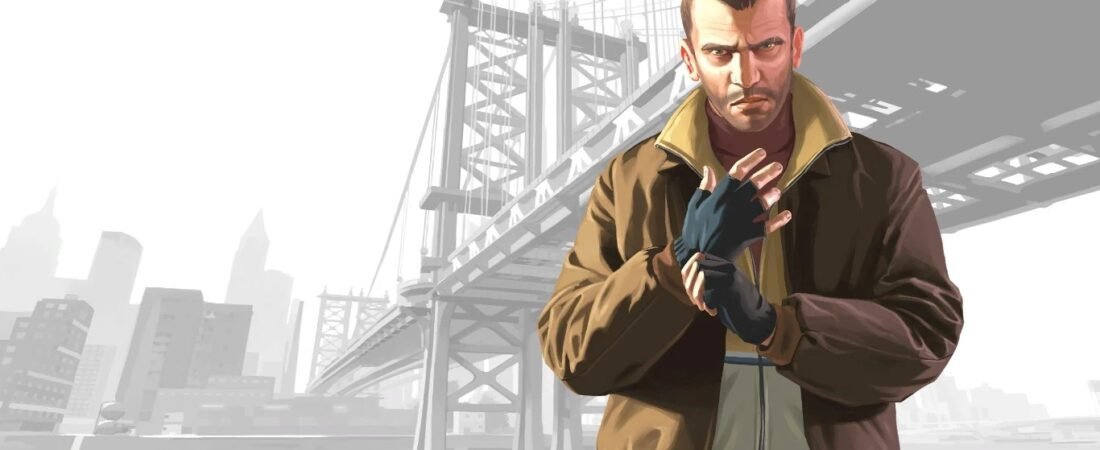
San Andreas ended the PS2 era with three cities, gang wars, jetpacks, casinos, fat stats, muscle stats, and a protagonist who could eat his way into a different body type. IV looked at all of that and said no. One city. No planes. No RPG stats. No car customization. A wardrobe that could fit in a laundry bag. In their place: a war veteran named Niko Bellic stepping off a cargo ship called the Platypus, chasing a man who betrayed his unit in a war ten years earlier, moving into his cousin Roman’s filthy little apartment in Broker because Roman’s letters home about mansions and sports cars were, to put it kindly, creative writing.
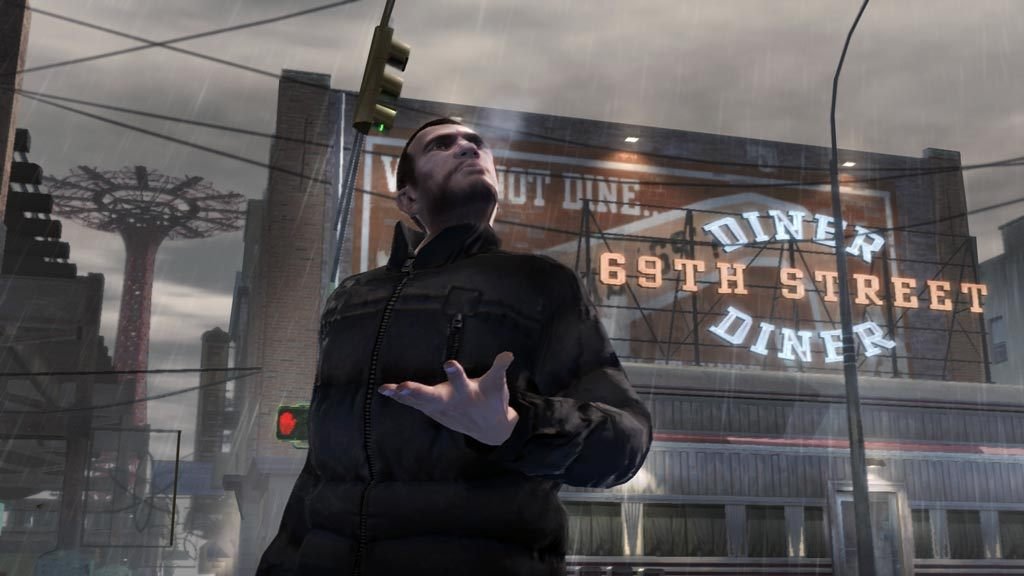
That is the whole game in one move. Niko’s American Dream is a scam email. He spends the story doing jobs for loan sharks, mobsters, and worse, telling himself each one gets him closer to the man he came for, and the game keeps asking what that hunt is costing him. The two endings are the thesis in action: pick the deal or pick revenge, and either way somebody Niko loves dies at a wedding. There is no clean win screen for a man like this. Rockstar had never written an ending that bleak, and a good part of the audience had never asked them to.
The era even had a perfect little scandal hiding inside it. Michael Hollick, the actor who voiced Niko, told The New York Times in May 2008 that he had been paid about $100,000 for roughly fifteen months of voice and motion work, with no royalties, while the game he headlined was making $500 million in a week. He blamed the union rules of the time, not Rockstar, and he still won Best Male Voice Actor at the 2009 Spike Video Game Awards. He also never recorded new lines for the two expansions, which is why Niko mostly grunts through his cameos in them on recycled audio. The American Dream, it turns out, applied to the cast too.
The argument that never ends: weight
If the story split people, the feel of the game split them harder. IV ran on Rockstar’s RAGE engine with Euphoria, NaturalMotion’s procedural animation system, and it changed how bodies behaved. Guys Niko shot did not fall over on a canned animation. They stumbled, grabbed at wounds, caught railings, tripped down stairs. Drunk Niko is still the funniest physics demo ever shipped: he does not walk so much as negotiate with gravity and lose. Fans who loved it called it alive. Fans who hated it called it controlling a refrigerator on ice.
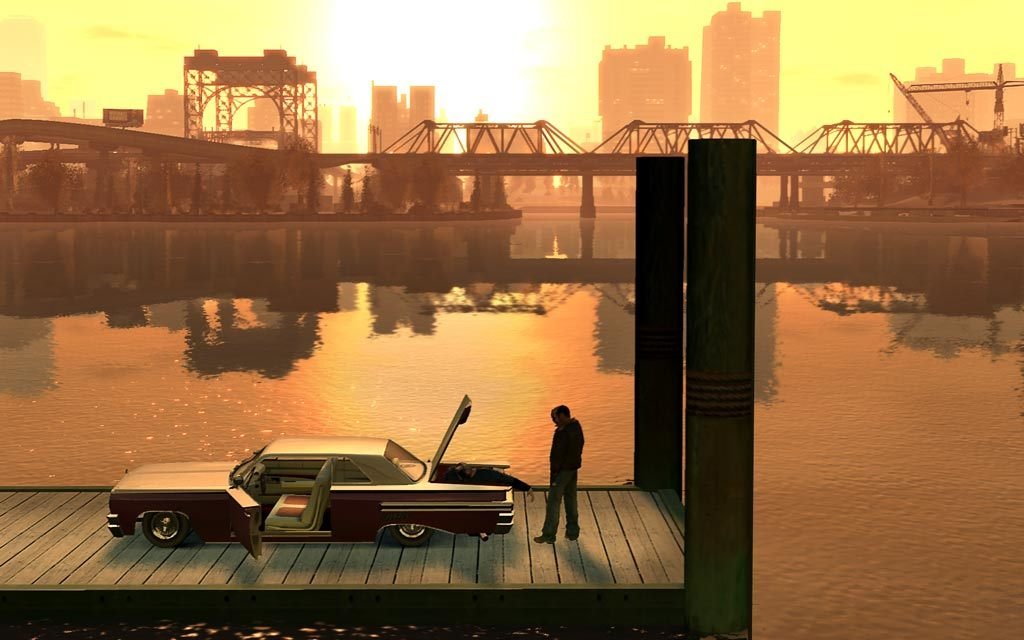
The cars took the most heat, which hurts me personally, because cars are my whole thing. IV’s cars have body roll. They lean, they dive under braking, the suspension works overtime, and a worn-out sedan handles like it is apologizing. Coming from San Andreas, where everything drove like a toy, half the fanbase read that weight as realism and half read it as the game fighting them. Eighteen years later I land here: the weight is the point. Liberty City was built dense and vertical, more like a real New York than the PS2 games could ever attempt, with Broker standing in for Brooklyn, Dukes for Queens, Bohan for the Bronx, Algonquin for Manhattan, and Alderney playing New Jersey. A heavy car in tight streets makes you drive like the city matters. It also makes a clean getaway feel earned instead of automatic. Your mileage, very literally, may vary, and the comment sections of the internet have been varying since 2008.
Your cousin wants to go bowling
IV also stuffed Niko’s life with obligations. The phone was not a menu, it was a social life with a battery. Friends liked you more when you showed up for darts, pool, drinks, or the comedy club, where the game put real sets from Ricky Gervais and Katt Williams on stage, and they liked you less when you ignored them. Keeping them happy paid out in genuinely useful favors: Roman’s free taxi, Little Jacob’s trunk full of guns, Packie’s car bombs, Brucie’s helicopter rides. Girlfriends were found on in-game dating sites, at in-game internet cafes, and one of them turned out to be very much not who she claimed to be, which is the most honest thing any GTA has ever said about dating.
And then there is the call. You already hear it. Roman’s check-in became the most quoted phone call in gaming history: “Niko, it’s Roman! Let’s go bowling!” It got memed so hard that people who never played IV know the line, and it became shorthand for everything players found annoying about the friendship system. Both things are true at once: the calls could absolutely ambush you at the worst moment, and the system underneath them was IV quietly inventing the modern GTA hangout loop. GTA V kept the friends and made them call less. Rockstar learned. Roman did not.
The PC version face-planted
Console players got a landmark. PC players, in December 2008, got a cautionary tale. The port arrived wrapped in Games for Windows Live, SecuROM, and Rockstar’s own Social Club, a stack of logins before a single mission, and then it ran badly on machines that ate other games alive. GameSpot covered the outcry within days of launch: poor frame rates on powerful rigs, short draw distances, crashes, missing textures, Amazon reviews dragging the average to about 1.5 stars. Rockstar’s own support guidance told players that most current hardware should stick to medium settings because the higher settings were provided for future generations of PCs. That sentence has lived in infamy ever since, because players heard it exactly how it sounded: the good version of this game is for computers that do not exist yet.
Time and patches fixed a lot of it, and the Complete Edition eventually made PC the easiest place to own the whole package. But the port’s reputation never fully recovered, and it taught the industry a lesson it keeps having to relearn: PC players remember a bad December forever.
Multiplayer before Online ran the world
It is easy to forget that GTA IV shipped with a real multiplayer suite five years before GTA Online existed. Fifteen modes, up to 16 players on console and 32 on PC, all run from Niko’s phone. There were deathmatches and races, sure, but the good stuff was weirder: Cops ‘n Crooks, where one team had to get its boss across the map alive, co-op missions like Hangman’s NOOSE and Bomb Da Base II, and Free Mode, which simply opened the whole city with no goal at all. Free Mode is the direct ancestor of every lobby you have ever idled in.
What it did not have matters just as much. No persistent character. No apartment, no business empire, no currency card with a shark on it, no decade of updates. You played a mode, you went back to Niko. It was a feature, not a lifestyle, and there is a version of the last decade of gaming arguments that starts right there. One sad footnote: when Microsoft buried Games for Windows Live, the PC Complete Edition update of March 2020 removed IV’s multiplayer on PC entirely. The mode that previewed the future got deleted by a dead login service.
Two episodes, fifty million dollars
In June 2007, Take-Two’s CFO confirmed on a company call that Microsoft was paying $50 million for two Xbox 360 exclusive expansions. That was real money spent to make PlayStation fans wait, and it produced the two best DLCs of their generation.
The Lost and Damned, February 2009, went darker than the base game: Johnny Klebitz and The Lost MC, a biker gang eating itself alive, all leather and metal and bad decisions. It also quietly fixed things, adding mid-mission checkpoints the original game badly needed, and Microsoft said it broke the record for first-day downloadable content revenue on Xbox Live. The Ballad of Gay Tony, October 2009, is the one everybody cites in the tone war, because it is Rockstar walking its own seriousness back in real time. Luis Lopez, nightclub money, Yusuf Amir’s gold-plated everything, parachutes back from San Andreas, an attack helicopter, an APC, sticky bombs, golf, cage fighting, club management. Same city, same engine, completely different blood pressure. The three stories even braid together around one bag of diamonds, with the same scenes replayed from different chairs.
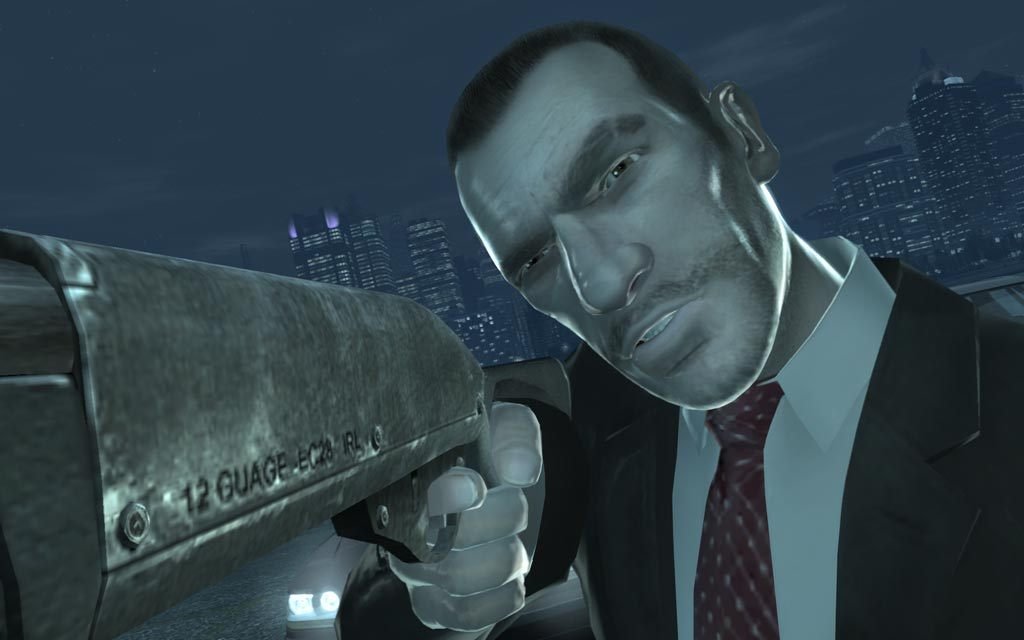
Read together, the episodes are Rockstar’s own review of GTA IV. The Lost and Damned says the darkness works. Gay Tony says, understood, but people also came here to play. GTA V is what happened when they stopped choosing between those two sentences.
Where it sits in 2026
The firm numbers stop early. Take-Two had IV past 20 million copies by March 2011 and past 25 million by July 2013, and later third-party estimates push the total higher, somewhere in the high twenties of millions, so treat anything past that official 25 million as estimate, not scripture. Not bad for the divisive one.
Playing it today is a split decision, just like everything else about this game. On Xbox Series X and S, backward compatibility plus the original’s uncapped frame rate means it runs at or near 60 frames per second, the smoothest the console version has ever felt. On PlayStation 5 there is still no native version at all, which is a strange hole for a game this decorated. And the copy you play now is not quite the copy from 2008: in April 2018, with ten-year music licenses expiring, Rockstar patched more than fifty songs out of the game, gutting Vladivostok FM hardest, because even Liberty City’s radio answers to lawyers.
As for a remaster, here is the honest state of it. Rockstar has announced nothing. Insider Tez2 reported in 2025 that a modern port was in development, pointing to a source inside the company, and a PlayStation 4 listing that briefly appeared on Rockstar’s own support page before vanishing added fuel. Insider NateTheHate has since said he has never heard of the project existing. That is the whole file: one reported port, one removed web listing, one denial, zero words from Rockstar. Believe whichever insider makes you happy, but do not spend money on the rumor.
My take
I respect the swing. Rockstar came off San Andreas with every incentive to go bigger and dumber, and instead they spent a reported budget north of $100 million (The Times put the figure there in 2008, with around a thousand people on the game) making a smaller, sadder, heavier thing about a man the American Dream personally scammed. It cost them features the fans loved, it cost them a chunk of goodwill, and it bought the series a second register. Without IV proving a GTA story could hurt, the grounded parts of GTA V do not land, and the Jason and Lucia material in the GTA 6 trailers does not read the way it does now, two people in over their heads instead of superheroes with a wanted level. That is observation, not a promise, but the DNA is right there on screen.
So where do you land? Team IV, the heavy one with the bowling cousin, or Team V, the blockbuster that gave the toys back? I already know my answer. Liberty City is calling, and for once I am picking up before Roman does.
Sources
Take-Two Interactive press release, May 7, 2008 (first-week sales: about 6 million units, over $500 million; day one 3.6 million units, about $310 million), and Take-Two SEC filing June 5, 2008. Guinness World Records certifications, May 13, 2008. Metacritic, Grand Theft Auto IV (Metascore 98, user score 8.4). IGN review, Hilary Goldstein, April 25, 2008 (10/10, “The story is Oscar quality”). GameSpot, 10/10 review, and “GTAIV PC Problems Spark Gamer Outcry,” December 5, 2008. Eurogamer review, 2008. The New York Times, Seth Schiesel’s review, April 2008, and “A Video Game Star and His Less-Than-Stellar Pay,” May 2008 (Michael Hollick’s $100,000). Take-Two statements for sales milestones: over 20 million (March 2011) and over 25 million (July 2013). GameSpot and PC World on the $50 million Microsoft deal (confirmed by Take-Two CFO Lainie Goldstein, June 2007 call) and the episodes’ release dates and 2010 arrival on PS3 and PC. GTA Wiki and GTAMods Wiki for multiplayer mode and player counts, and the March 2020 removal of PC multiplayer. Kotaku UK reporting and Rockstar statements, April 2018, via TheGamer and Rock Paper Shotgun, for the removal of more than 50 songs. Notebookcheck (May 2025, updated October 2026) and Tech4Gamers (April 2026) for the Tez2 port reports and NateTheHate’s denial. Wikipedia’s Xbox backward compatibility list for the uncapped frame rate note.
The Checkpoint Poll
Leave a Reply