Supergiant had never made a sequel. For Hades II, the studio’s first, it kept the structure that won a Hugo Award and replaced the person at the center of it: out goes the warrior prince built on dash aggression, in comes a witch whose entire kit runs on a resource that has to be charged, aimed and defended. The fifth entry in my indie analysis series is about what happens when a protagonist swap is not a costume change but a systems rewrite.
What Hades II is
Hades II is a roguelike action RPG from Supergiant Games, announced at The Game Awards in December 2022, launched in early access on May 6, 2024 for Windows, and released in full on September 25, 2025 for Windows, macOS, Nintendo Switch and Switch 2, with PlayStation 5 and Xbox Series X/S versions following in April 2026. It costs $29.99, the same price it carried through early access.
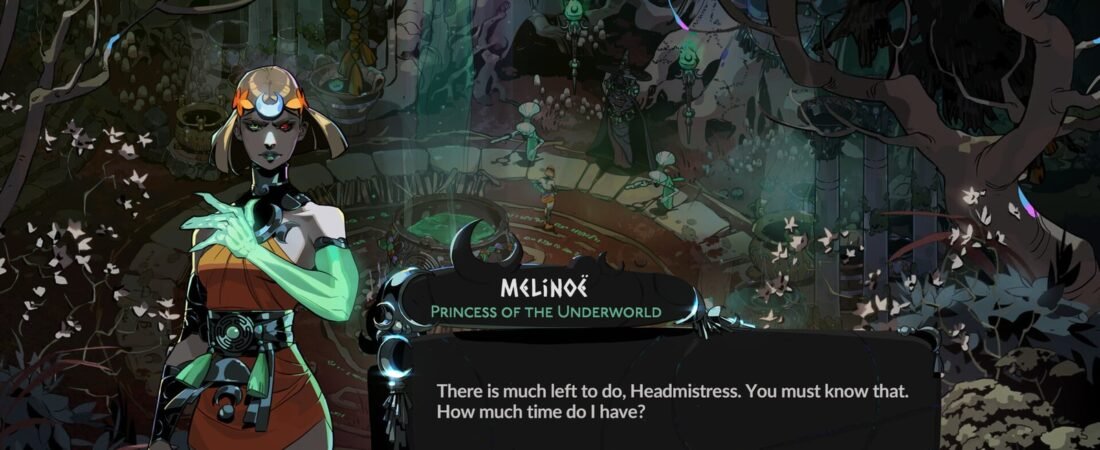
Chronos, the Titan of Time, has seized the Underworld and taken Hades, Persephone and Zagreus prisoner. You are Melinoë, immortal Princess of the Underworld and Zagreus’s younger sister, raised and trained by Hecate, goddess of witchcraft, for one lifelong mission: kill her own grandfather, the Titan who took her family. Where the first game was rooted in the Underworld of Greek myth, the sequel is built explicitly around the dawn of witchcraft, and Melinoë fights with dark sorcery and magick-infused weapons of Night, backed by more than a dozen Olympian gods.


A princess found in a footnote
The protagonist choice explains the whole design. Creative director Greg Kasavin found Melinoë in the Orphic Hymns, where she is named as a daughter of Hades and Persephone and almost nothing else is written about her: a blank slate with a family link. Her occult associations are what licensed magic as a core mechanic and Hecate as a mentor rather than a guest star.
That single decision cascades. A witch does not fight like a prince. Her power has a meter, her tools are gathered and crafted, her home is a working encampment rather than a palace, and her progression systems are rituals instead of furniture. Supergiant did not reskin Zagreus. It chose a different mythology of power and let the mechanics follow.
Magick changes everything
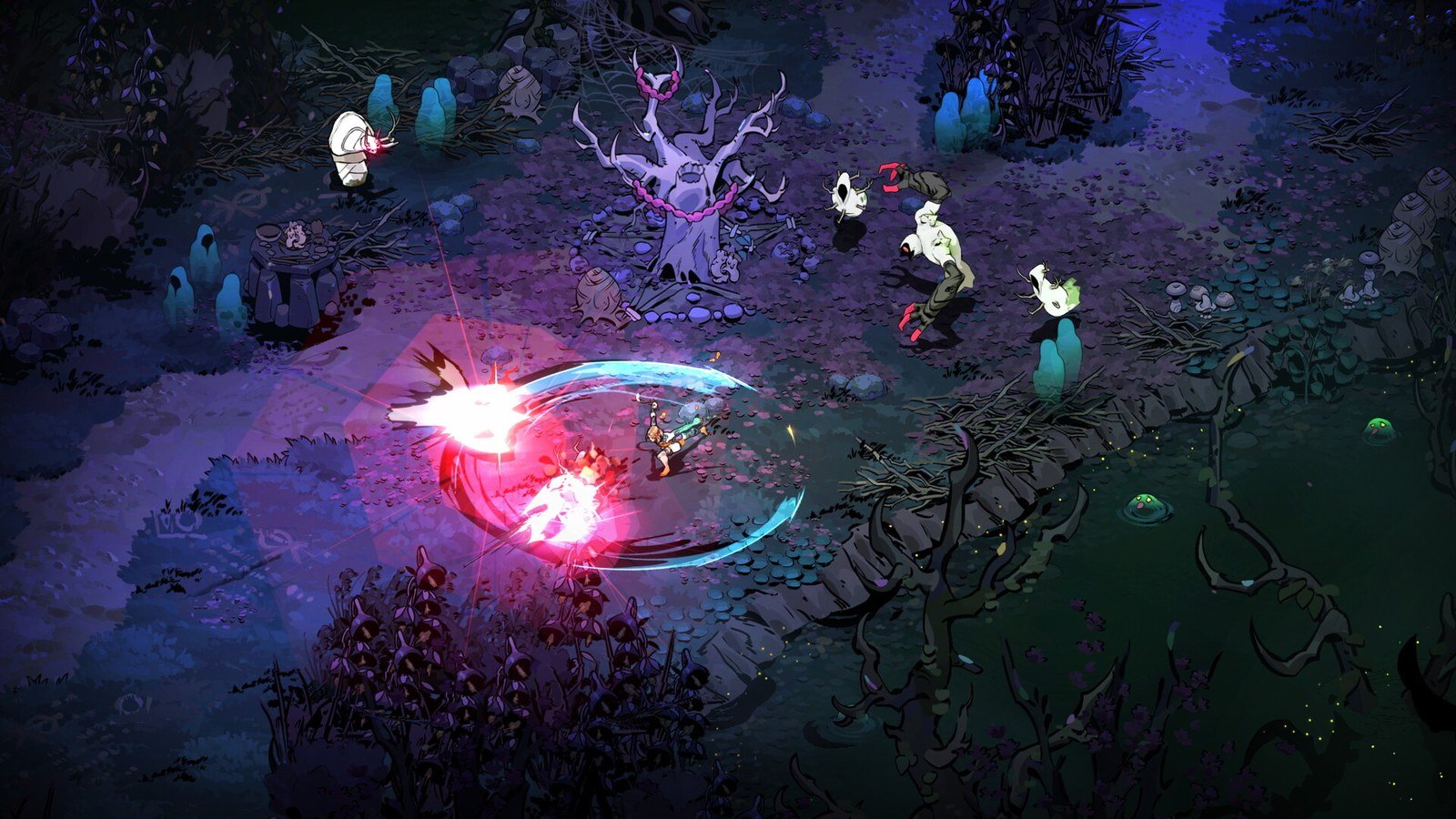
The headline system is the Magick bar, sitting under Melinoë’s health. Holding Attack, Special or Cast channels an Omega Move, a charged, stronger variant with new properties: bigger areas, extra projectiles. Omega Moves cost Magick, which refills between locations and through Boons and Arcana. The tactical consequence is large: Hades rewarded relentless dashing in and out, while Hades II combat is built around creating safe windows to stand and channel, which repositions the whole fight around timing and space control.
The movement kit changes with it. Zagreus could dash repeatedly, and dashing was the core defensive tool of the first game. Melinoë has a single dash on a cooldown, and holding the button turns it into a Sprint, which Boons (Hermes above all) can modify and build around. Her Cast is no longer a projectile either: it drops a binding circle that roots enemies in place, and Boons can twist it into a damage vortex. Crowd control replaces the bloodstone.
Each run can also carry a Hex from Selene, goddess of the Moon, upgraded along a Path of Stars skill tree during the run, and the six Nocturnal Arms (Witch’s Staff, Sister Blades, Umbral Flames, Moonstone Axe, Argent Skull, and the Black Coat, added in the Olympic Update) each interact with the Magick economy differently. Boons now carry elemental essences as well, and some only activate based on how much of an essence the build holds, adding a quiet counting game beneath the god choices. God Mode returns for players who want the story reachable, granting growing damage resistance after each failed run, capped at 80 percent.
Two roads, two wars
The first game had one road: four regions up from Tartarus to the gates. Hades II doubles the geography and maps it onto a two-front war. Each night, Melinoë chooses a direction. The Underworld route descends to Chronos through Erebus, Oceanus and the Fields of Mourning into Tartarus, facing Hecate, Scylla, Cerberus and the Titan himself. The Surface route climbs to defend Olympus through the City of Ephyra, the Rift of Thessaly and Mount Olympus to the Summit, against Polyphemus, Eris, Prometheus and Typhon.
Two full campaigns, then, with separate regions, bosses, resources and story threads, feeding one shared hub and one shared build. The structure is the plot: a war fought downward against time and upward against a siege, by the same witch, on alternate nights.
The hub is a witch’s workshop
Hades handled permanent progression with a menu, the Mirror of Night, in Zagreus’s bedroom. Hades II routes the same job through the fiction. The hub is the Crossroads, Hecate’s encampment between worlds, and its systems are diegetic witchcraft. At the Cauldron, gathered reagents are spent on Incantations (76 recipes) that permanently unlock features, vendors and mechanics. A garden grows the seeds she gathers. The Silver Pool is where weapons and tools are crafted.
At the Altar of Ashes, Arcana Cards replace the Mirror: 25 tarot-like cards revealed in a grid as their neighbours unlock, bought and upgraded with Ashes, with Psyche raising Grasp, the budget that limits how many cards can be active at once. The loadout is therefore a constrained decision made before each night, not a shopping list. Gathering sharpens the same point: one tool per run (Crescent Pick for ore, Silver Spade for seeds, Tablet of Peace for shades, Rod of Fishing for fish that trade into Bones), and because gathering feeds the crafting and incantation economy, the choice of tool is an opportunity cost, not a formality.
Bondable animal Familiars complete the picture: Frinos the frog blocks projectiles and adds health, Toula the cat grants an extra Death Defiance and helps fish, Raki the raven marks enemies for critical vulnerability, and Hecuba the hound brings Magick, stuns and a nose for buried items. Time in the hub is play, with prices attached, rather than a settings screen between runs.
The ending fight, and the patch
Honesty is part of the record here: the 1.0 ending drew real criticism from outlets like Polygon and Rock Paper Shotgun and a visible audience backlash. Supergiant’s response is the analytically interesting part. About a month after launch, the studio patched in additional ending scenes and a way to revert to the pre-conclusion state for players who wanted it. A studio famous for writing in the open, across nearly two years of early access feedback, treated even its finale as a draft the audience could answer.
Launch in early access, again
The sequel repeated the first game’s open development at a bigger scale. The early access launch in May 2024 passed 100,000 concurrent Steam players within roughly a day and peaked at 103,567. The 1.0 launch peaked higher still: 112,947 concurrent players on September 28, 2025, more than double the original Hades’ all-time peak of 54,240. Three major updates carried the early access period (Olympic, Warsong and Unseen), and the finished game won Best Action Game at The Game Awards 2025 and the Steam Award for Best Game on Steam Deck. Critics scored it 94 on Metacritic for PC and 93 on OpenCritic in the launch window.
One number needs a label: Supergiant has published no official unit sales figure. The estimate in circulation, from analytics firm Alinea, puts early access sales at over 2 million copies on Steam and roughly $50 million in revenue. That is an analyst estimate, not a studio figure, and it should be quoted as one.
My take
The analytical core of Hades II is that identity drives mechanics. Swapping a warrior for a witch sounds like flavor; here it rewired the combat economy (charge windows instead of dash spam), the meta-progression (rituals instead of menus), the geography (two wars instead of one road) and even the hub’s daily texture (gathering, gardening, crafting, familiars). Almost nothing in the sequel is the first game’s system with a new coat of paint, and the things that do return, Boons, Death Defiance, God Mode, return because they were load-bearing.
Supergiant spent its first sequel proving the formula was never the weapons or the gods. It was the discipline of making every system answer to the fiction. Melinoë is the proof of concept: change who the character is, honestly, and the whole game has to change with her.
Sources
- Steam store page, Hades II (Supergiant Games): price, app details, story framing
- Wikipedia, Hades II: release history, updates, gameplay systems, reception, ending patch
- Game Informer, the making of Hades II: Melinoë’s origin in the Orphic Hymns
- SteamDB via gamesindustry.biz and GameSpot: concurrent player peaks
- Alinea Analytics via gamesindustry.biz: early access sales estimate (labeled as an estimate in the text)
- Metacritic and OpenCritic: review scores cited in the panel above
The Checkpoint Poll
Leave a Reply