No timers. No stamina. No battle pass, no daily login, no boss that asks your hands to do gymnastics. Just you, six friends in little balls, and a region that waits politely for you to be ready. This is the game my generation grew up on, and in 2026 it came home.
By Ruan Martini, Daily Checkpoint, November 1, 2026
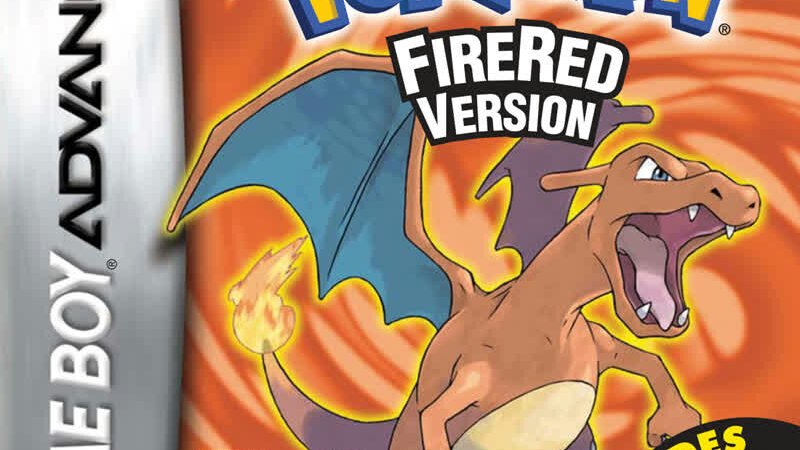
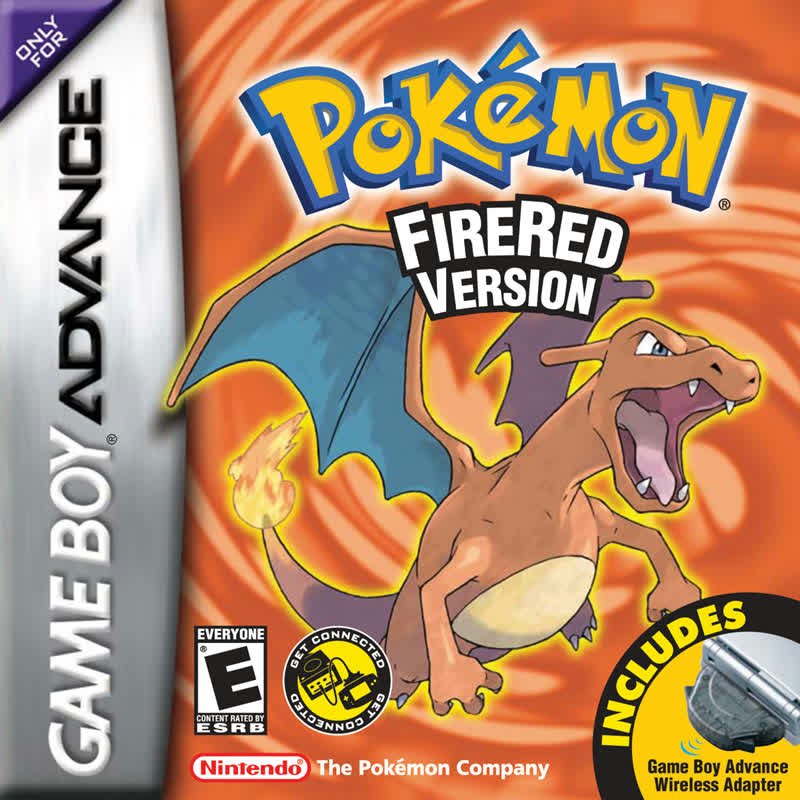
There is a red cartridge at the heart of this story. Or, if your house rolled the other way, a green one. Pokémon FireRed and LeafGreen arrived on the Game Boy Advance in 2004, Japan in January, North America in September, and if you were a kid at the time, you already know what the box looked like before I describe it: Charizard, roaring, orange as a traffic cone, taking up the entire cover like he paid rent on it. For a huge part of my generation, this was not just a Pokémon game. This was THE Pokémon game, the one that lived in the GBA, the one that went to school in a backpack pocket, the one whose save file felt like a member of the family.
Here is the part younger players sometimes miss: FireRed was already a nostalgia play in 2004. It is a remake of Pokémon Red and Green, the 1996 originals, the very first Pokémon games. Game Freak director Junichi Masuda said the quiet part out loud at the time: it had been eight years since Red and Blue, the target audience had changed, and a whole new generation of kids would meet Pikachu and Charizard as brand new characters. So they rebuilt Kanto for the Game Boy Advance, with modern mechanics, new color, and a pile of additions, and they aimed it at the children of 2004. I was one of those children. It worked on me like it was designed in a lab to work on me. Twenty two years later, I am here to tell you it still works, and to explain why this game, of all games, might be the healthiest thing you can play in 2026.
Why Kanto Needed A Second Life
FireRed did not happen because Game Freak ran out of ideas. It happened because of a technical heartbreak. When Ruby and Sapphire launched the series on Game Boy Advance in 2002, the new games could not connect to the Game Boy and Game Boy Color originals at all. Different hardware, no bridge. Overnight, hundreds of Pokémon from Kanto and Johto were simply unavailable in the new generation, stranded on old cartridges. For a series whose entire religion is “gotta catch them all,” that was a five alarm fire.
FireRed and LeafGreen were the rescue mission. As the first remakes in the franchise’s history, they brought Kanto back inside Generation 3, reconnected the region to Hoenn, and, with the new Sevii Islands postgame and trading across the GBA games, made all 386 Pokémon of the era obtainable again. They also quietly reset the series’ grammar: a female hero option in Kanto for the first time, a slick new help system for new players, the Teachy TV, the Fame Checker that lets you gossip about every important character, and a little gadget called the VS Seeker that let you rematch trainers in the field, which in 2004 felt like discovering electricity. The games even launched bundled with the GBA Wireless Adapter, Nintendo’s first step into wireless trading, no link cable required. Schoolyards were never the same. Actually they were exactly the same, just with fewer cables to lose.
The market noticed. FireRed and LeafGreen became the second best selling games on the entire Game Boy Advance, behind only Ruby and Sapphire themselves, and they remain the only core series Pokémon games to ever receive Nintendo’s Player’s Choice award. A remake, released to fix a compatibility problem, outsold almost everything on its platform. Kanto, it turns out, was not a place. It was a home address.
The Comfort Argument: A Game That Never Punishes You
Now let me make the actual case, because it is not really about nostalgia. Plenty of old games are only good in your memories. FireRed is good in your hands, today, and the reason is a design philosophy the industry has mostly abandoned: this game refuses to stress you out.
Everything in FireRed is turn based. Everything. A wild battle starts, and the game waits. It waits while you think. It waits while you go make coffee. It waits while your mom calls you for dinner, in 2004 and in 2026. There is no timer draining, no stamina bar refilling on a real world clock, no limited time event expiring while you sleep, no reflex test standing between you and progress. Your hands can be slow. Your hands can be tired. Your hands can be holding a sandwich. FireRed does not care, because FireRed is a game you beat with your brain.
Winning is a knowledge sport here. Type matchups, team balance, levels, items: every fight is a small puzzle you solve by understanding the world better than you did an hour ago. The famous difficulty spikes are really comprehension checks wearing a scary hat. Brock destroys your Charmander, and the game is not punishing you, it is teaching you, patiently, that fire loses to rock and that a Butterfree with Confusion is about to become your best friend. Even the one legendary tantrum of the era, Whitney’s Miltank over in Johto, belongs to a different game. Kanto’s challenges are fair fights with visible rules. When you lose in FireRed, you know exactly why, you adjust, and you win. That loop, learn and overcome, with zero humiliation in between, is the entire soul of comfort gaming.
It also makes the game quietly accessible to almost anybody, in a way the modern industry keeps claiming to want and then forgetting to build. A kid can play it, because the reading is simple and the rules are honest. A returning adult with a job, a commute, and exactly forty free minutes can play it, because nothing in Kanto punishes you for having a life. A player whose hands do not do fast can play it at full strength, because full strength in FireRed lives in the team you built and the choices you make, not in a reaction window measured in frames. There is no wrong way to hold the controller here. There is barely a way to hold it at all. You could steer this entire game with one thumb and a cup of coffee in the other hand, and the game would respect you for it.
The structure respects you the same way. Save anywhere. Play in ten minute bursts or in a six hour Sunday collapse on the couch, and the game fits both shapes like it was tailored. The map is small enough to memorize and dense enough to reward memory: shortcuts open, HMs reshape how you read old routes, and Kanto slowly turns from a place you explore into a place you know. Modern open worlds are a hundred hours of checking boxes off a list somebody else wrote. FireRed is twenty to thirty hours of a region becoming yours. There is a reason completionists and casual players finish this one at roughly the same happiness level. Nobody is being farmed. Nobody is the product. You bought a game, the game is the whole game, and then it ends, like a good book, and lets you go outside.
Kanto, Perfected
What makes FireRed the definitive Kanto, ahead of the beloved originals, is that it keeps every single thing that mattered in 1996 and quietly fixes everything that did not. The story is the same beautiful skeleton: Pallet Town, Professor Oak, the rival who picks the starter that beats yours and will simply not stop smiling about it, eight gyms, Team Rocket doing crimes in business attire, the Elite Four, the crown. Same rival. Same Snorlax, asleep in the exact middle of the road, a perfect roadblock, an icon. Same Mewtwo waiting in the dark at the end of the world like a final exam.
And the moments. Oh, the moments are load bearing. The S.S. Anne, a luxury ship full of trainers, where your rival ambushes you on the dock like it is his job, because it is. The Silph Co. headquarters, eleven floors of corporate hostage crisis that you, a child, resolve personally. And Lavender Town, the little town with no gym and a tower full of ghosts, where the game stops being a cartoon for exactly one storyline: a mother Marowak, killed by Team Rocket protecting her baby, whose spirit will not rest until you climb that tower and set things right. A children’s game on a handheld in 2004 paused the adventure to teach you about grief, and it did it in about fifteen minutes, with no voice acting and barely any animation, and it worked so well that kids who played it thirty years ago still get quiet when the Lavender Town music starts. That is not nostalgia. That is writing.
On top of that skeleton, the remake hangs two decades of good decisions. Generation 3 mechanics under the hood: abilities, natures, held items, double battles, a real bag with pockets. Sprites and towns rebuilt in color that still looks clean today, because strong pixel art does not age, it just becomes classic. A soundtrack remixed from the original chiptunes that hits your memory like a key in a lock. And then, the masterstroke: after the credits, the Sevii Islands, a whole second mini region of postgame islands with Johto Pokémon, new story threads, and room to breathe. The 1996 game ended at the Hall of Fame. FireRed ends, and then asks if you would like a vacation.
Should we talk about the flaws? Briefly, and with love, because this is a retrospective and not a wedding speech. The HM system still glues half your team’s move slots to field chores, and somebody in your party is carrying Cut and Flash like a unpaid internship. TMs are single use, so every great move is a small act of financial anxiety. The grinding spots in the late game are honest work. And the 2026 Switch port, which we are getting to, kept all of it, the purity and the splinters, and skipped online play entirely. I forgive all of it. You may quote me. A game this warm has earned its splinters.
2026: It Came Home
Because here is the beautiful punchline of this whole retrospective: you do not need a Game Boy Advance, a charger cable, and a prayer to play FireRed right now. On February 27, 2026, Pokémon Day, in the middle of the franchise’s 30th anniversary, Nintendo released FireRed and LeafGreen on the Nintendo Switch eShop. Twenty dollars each. Sold standalone, pointedly not buried inside a subscription library, yours to keep like a cartridge. The link cable is gone, replaced by local wireless, with a Wireless Club upstairs in every Pokémon Center where up to five players can trade, battle, and play the little minigames, just like the schoolyard, minus the actual school. Pokémon HOME support ties your 2004 team into the modern ecosystem. Reviewers, checking their nostalgia at the door and coming back honest, landed in the same place: it holds up. The friction is real, the missing online features are a genuine asterisk, and the game underneath all of it is still a small masterpiece of focused RPG design.
My favorite detail is the pettiest one. The Switch release is sold in separate language editions: English, European French, European Spanish, mirroring exactly how the GBA originals were distributed back in the day. Which means that in 2026, an official FireRed in Portuguese still does not exist. We are going to fix this drought in the funniest possible order, and that brings me to the real reason this old game is on this site today.
The Warm Up For Generation 10
In 2027, Pokémon Winds and Waves opens Generation 10 on Switch 2, and for the first time in history, a mainline Pokémon game ships with Brazilian Portuguese support. I wrote the whole story of that announcement, the starters, and what the Switch 2 jump means over here, in our Winds and Waves coverage, and it connects to this old red cartridge in a way that makes me stupidly happy. In 2004, Brazilian kids played the best version of Kanto in English, because English was the price of admission. In 2027, Brazilian kids play Gen 10 in Portuguese, because the series finally came to us. FireRed is where that story starts for my generation. Winds and Waves is where it lands.
So here is my prescription, trainer to trainer. The 2027 calendar on our Coming Soon page is a war zone of giant open worlds and hundred hour epics. Before the wave hits, take a few weeks with the twenty dollar comfort game. Rebuild your Kanto team. Beat your rival’s smile off his face. Remember what Pokémon feels like when it is purely, stubbornly on your side: no timers, no punishment, no noise, just a region, a rival, and a Charizard on the box, roaring like he pays rent. He does now. He lives in my Switch. He can live in yours for twenty bucks.
Tell me in the comments, because I already know this question starts fights at family gatherings: FireRed or LeafGreen, Charmander, Squirtle, or Bulbasaur, and be honest, how many hours did your childhood save file have? Mine is a number I will take to the grave. Some things a man keeps between himself and Professor Oak.
Sources
Bulbapedia, Pokémon FireRed and LeafGreen Versions: release dates (Japan January 29, 2004; North America September 9, 2004; Europe October 1, 2004), first remakes in the franchise, Generation 3 connectivity context, Sevii Islands, Wireless Adapter bundle, second best selling GBA games behind Ruby and Sapphire, Player’s Choice award, and Junichi Masuda’s comments on the changing target audience. Dot Esports, Nintendo Life and OpenCritic, on the Nintendo Switch eShop release of February 27, 2026: pricing at $19.99 each, standalone release outside Nintendo Switch Online, local wireless Wireless Club for up to five players, Pokémon HOME support, separate language editions, and critical reception. Nintendo and The Pokémon Company, Pokémon Presents, February 27, 2026.