By Ruan Martini, Daily Checkpoint
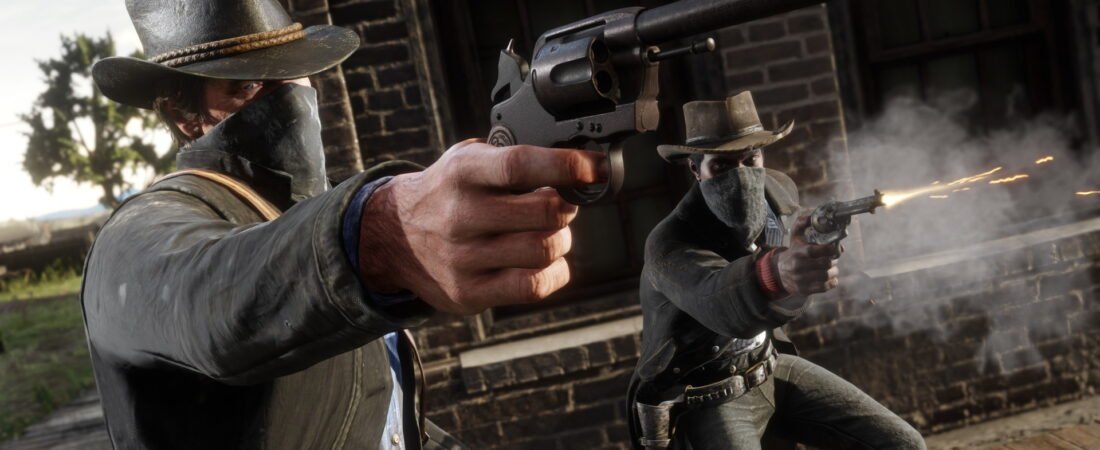
Eight years ago today, give or take the time it took me to stop staring at the download bar, Red Dead Redemption 2 came out. October 26, 2018. I remember the feeling because it is rare: a game so big that the rest of the industry just quietly moved out of its way.
Here is why I am writing about a cowboy game on a site that lives and breathes GTA 6. Red Dead Redemption 2 is not a side quest in Rockstar’s history. It is the direct ancestor of everything we are about to play on November 19. When Edge magazine played GTA 6 and came back talking about density, interiors and a world that remembers you, they were describing a design language Rockstar learned building this game. When Jason Schreier reported on GTA 6 for Bloomberg, he used Red Dead 2 as the benchmark, including his favorite anecdote from the whole company. This western is the blueprint. So let us go back and look at what the blueprint actually cost, what it sold, and what it teaches us about the game that is about to eat our lives.
The launch that only lost to Rockstar itself
Start with the receipts, because the receipts are stupid. Rockstar announced that Red Dead Redemption 2 made over $725 million in worldwide retail sell-through in its first three days. That was the single biggest opening weekend in the history of entertainment, not just games, entertainment, and the second biggest launch of all time behind only GTA 5, which did a billion in three days back in 2013. Sony confirmed it also set PlayStation Network records for pre-orders, day one sales and first three days sales. Within about two weeks it had passed 17 million copies, which means it outsold the entire lifetime total of the first Red Dead Redemption before most people had finished Chapter 2.
Then it just kept going. Take-Two’s earnings reports have turned into a slow drumbeat ever since: 61 million by late 2023, 79 million by November 2025, and, per Take-Two’s report for the quarter ending June 2026, more than 87 million copies. That puts a 2018 western with no native PS5 version, no story DLC and an abandoned online mode among the best-selling games ever made, in the same air as GTA 5 and Minecraft. Take-Two CEO Strauss Zelnick even said in May 2026 that the game had hit its highest level of annual unit sales since its launch year. Eight years in. No updates worth mentioning. It sells because it is Red Dead 2, full stop.
Critics matched the money. The game sits at a 97 on Metacritic for PS4, and at The Game Awards 2018 it won Best Narrative, Best Score and Music, Best Audio Design and Best Performance for Roger Clark. It did lose Game of the Year that night to God of War, which is funny, because the two games have been arguing with each other in group chats ever since. Cinematic dad story with feelings, or cinematic outlaw story with feelings. Pick your fighter. I already wrote my God of War take on this site, so you know I respect the other corner too.
My favorite part of that whole story: there is still no native current-gen version. The game that half the industry calls the greatest open world ever made runs on your PS5 through backward compatibility, at the same 30 frames it had on a PS4. Rockstar knows we would buy it again. They are just busy. We know what they are busy with.
A dying man with a memory
Arthur Morgan should not work on paper. He is a 36-year-old enforcer for a failing gang, a man whose job description is hurting people for money, in a story where you already know the West is ending and his gang is doomed. And yet Roger Clark’s performance, which won Best Performance at The Game Awards 2018, turned him into the character a whole generation of players got genuinely attached to. I have seen grown adults get quiet talking about the end of Chapter 6. You know the scene. If you do not, I am not spoiling it here, go play the game, you have had eight years.
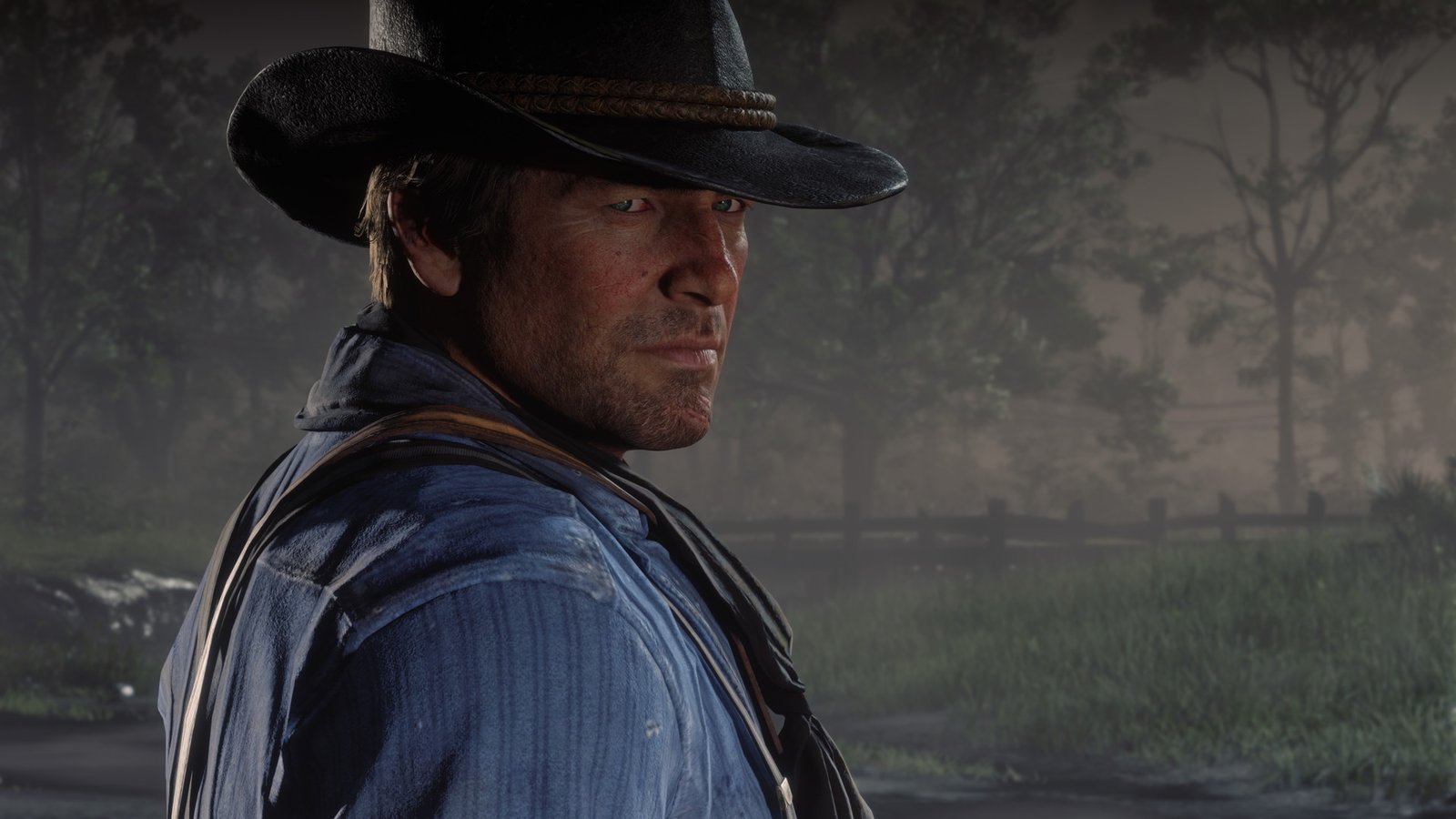
The honor system is what makes Arthur yours instead of just Rockstar’s. It is a simple meter on the surface: help strangers, greet people, pay your debts and your honor climbs; rob, murder and act like a feral animal and it drops. But the game wires that meter into everything. Shopkeepers change prices for a man with a good name. Townsfolk greet you or cross the street. Witnesses think twice. Even Arthur’s dreams answer to it, a deer in sunlit woods for the honorable version of him, a coyote in the rain for the other one. It is a morality system that never lectures you. It just makes the world behave like your reputation is real.
That is a very GTA 6 idea, by the way. Reading the Edge reporting on Leonida, with the police keeping a file on Jason and Lucia and the game tracking how the two of them treat each other, I kept thinking: this is the honor system’s family. Systems that watch how you behave and quietly change the world around the answer. Rockstar prototyped the philosophy in 1899.
The detail obsession, measured in pages and horse anatomy
Now the part everyone jokes about, because the jokes write themselves. Dan Houser told Vulture that the finished game contains around 300,000 animations and 500,000 lines of dialogue. The main story script ran about 2,000 pages. Print everything, the side missions, the ambient conversations, the shopkeeper small talk, and Houser estimated the stack would stand about eight feet high. Individual NPCs had scripts. Some pedestrians effectively had novellas.
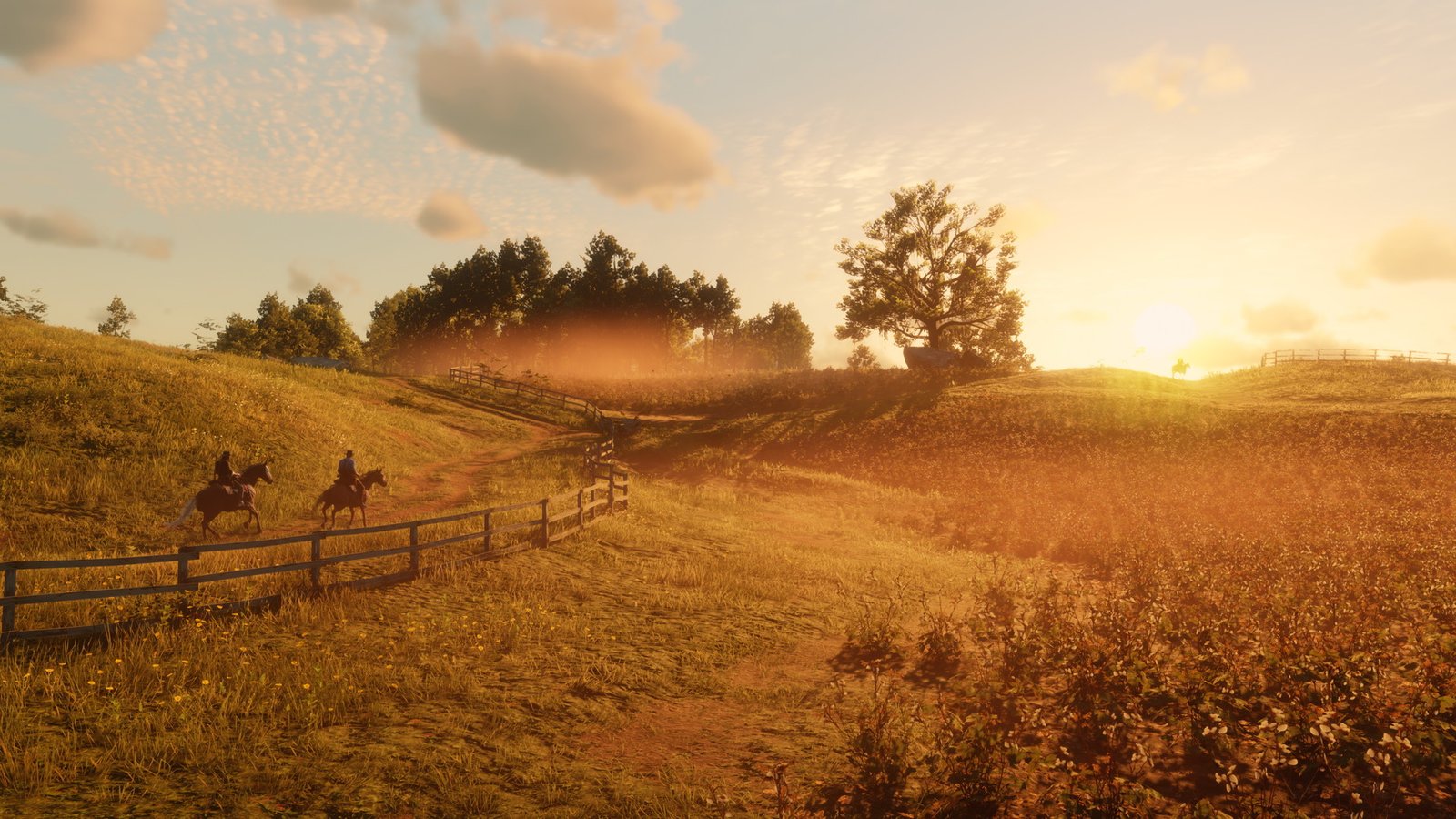
And yes, the horses. It is true, all of it: the horses in this game have testicles that shrink in cold weather and relax in the heat. Kotaku’s Stephen Totilo asked Rockstar about it directly during the preview cycle and they confirmed it with a straight face. It became the meme of the year, and people forget it was never a random gag. The Guardian asked Rockstar co-studio head Rob Nelson about the philosophy behind details like that, and his answer was basically that the pile of tiny, individually pointless details is the point. Each one is something your brain registers without you noticing, until the illusion stops feeling like an illusion. The possums that actually play possum when you approach them. The snow that melts off Arthur’s shoulders. The mud that dries and flakes off his boots. Roughly 200 species of animals with predators hunting prey on their own schedules, whether you are watching or not.
That ecosystem matters for this site. I wrote a whole piece here about GTA 6’s wildlife, with reporting pointing at more than 170 species in Leonida. Where do you think Rockstar learned to build living animal systems at that scale? Not in Los Santos, where the wildlife was mostly decoration. In Lemoyne and New Hanover, where the animals were a simulation.
Eight years, every studio, and the bill nobody can unsee
Building that took a structure no other company really attempts. Rockstar merged all of its studios into one giant team for this game, something that has since become their standard way of working. The credits run to roughly 2,000 people, motion capture alone took about 2,200 days of shooting with some 1,200 actors, and full development stretched across the better part of eight years after the first Red Dead Redemption.
It also produced the most important labor story in the industry. In that same Vulture profile, Dan Houser mentioned, almost casually, that the team had been working 100-hour weeks several times in 2018. He later clarified that he meant himself and the three other senior writers during a three-week stretch, and Rockstar said average weeks across the company in 2018 ran in the low-to-mid 40s. Then Jason Schreier published his investigation at Kotaku, built on interviews with 77 current and former employees, and the picture got more complicated than either side’s statement. Some people described manageable overtime and real pride in the work. Others, especially in QA at Rockstar Lincoln and in cinematics and design, described 55-to-80-hour stretches, weekend work that felt mandatory whether anyone used the word or not, and a culture where staying late was how you proved you belonged. Some of the worst stories, Schreier wrote, he could not print without risking the people who told them.
I am not going to flatten that into a hot take, because the honest version is the one Schreier himself landed on: it depended on your studio, your department and your manager. What I will say is that the story changed things. It changed the conversation around crunch across the whole industry, and by Schreier’s own later reporting on GTA 6, it changed Rockstar too: his Bloomberg coverage and his October 2026 video describe a company that deliberately reformed its culture during GTA 6’s development, converting contractors to full-time and trying to build Leonida without the old mandatory-crunch machine. If GTA 6 lands on November 19 and feels as dense as Red Dead 2, it will partly be a test of whether Rockstar learned to do the detail obsession sustainably. I hope they did. The deer dreams are not worth broken lives.
The online mode that got a funeral
For a quick measure of how much Rockstar’s priorities shifted, look at Red Dead Online. It launched in beta a month after the main game, built a small, loyal, extremely dedicated community, and then slowly starved. The last major update, Blood Money, arrived in July 2021. In July 2022, Rockstar confirmed what players already suspected: major themed updates were over, because the studio had been, in their words, steadily moving more development resources towards the next entry in the Grand Theft Auto series. The community responded by holding an in-game funeral, hashtags and all, mourning their own game inside the game.
Compare that with GTA Online, which has been fed like a king since 2013 and is still getting expansions. Rockstar can clearly only fully support one online empire at a time, and they chose. I do not blame the Red Dead players for the funeral. I also cannot pretend I do not understand the math. But it is the one genuinely sad chapter in this retrospective: a world this beautiful deserved better company in its old age.
What GTA 6 inherits from the frontier
So, the inheritance list, because this is a GTA 6 site and everything leads home. One: scale of animation. Edge’s reporting puts GTA 6 at roughly 600,000 animations, double the 300,000 Houser quoted for Red Dead 2, and the magazine keeps using Red Dead as the measuring stick because it is the last time Rockstar shipped a world like this. Two: the art team story Schreier told in his October 2026 GTA 6 video, where Rockstar’s art department grew from a handful of people on GTA 5 to a small army by GTA 6, with Red Dead 2 as the turning point in the middle. Three: NPCs with routines and memories instead of traffic cones with dialogue. Four: an animal ecosystem that runs itself. Five: a story about people the world is leaving behind, told slowly, with room to just sit by a fire. Sound familiar? Jason and Lucia are not Arthur and the gang, but they are answering the same question: what does it feel like to live at the end of an era, in a place that does not need you anymore?
My take
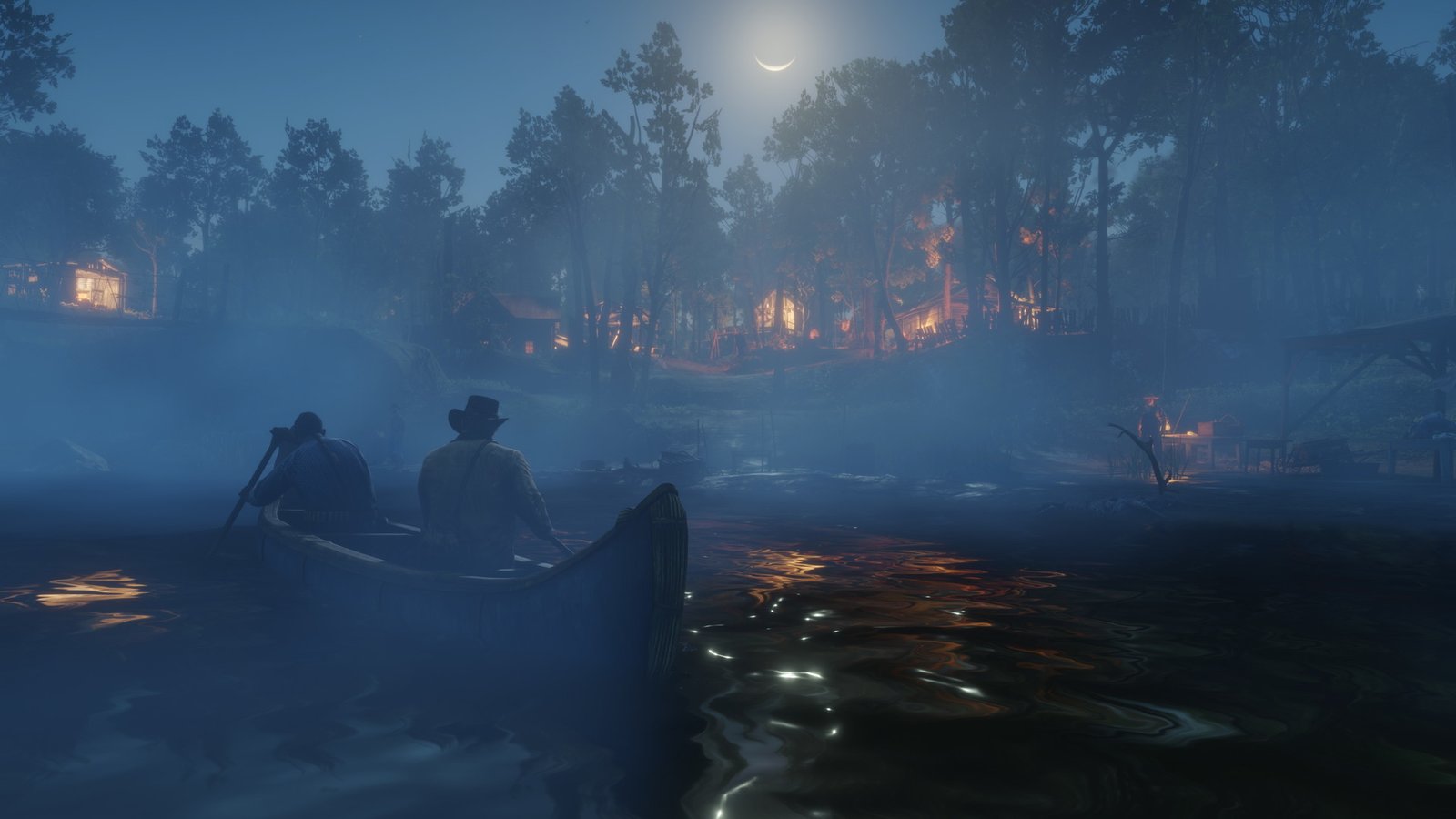
People ask if Red Dead 2 is still worth playing in 2026, three weeks before GTA 6. My answer: it is the only homework that feels like a vacation. It is slow on purpose, stubborn about it, and the first two hours in the snow filter out anyone who needs an explosion every ninety seconds. Let it. This game is the reason the words “Rockstar detail” mean something, the reason a leaked animation count for GTA 6 can make grown men emotional, and the reason I trust that Leonida is going to feel alive in ways Los Santos never did.
Just give me a proper PS5 version one day, Rockstar. Sixty frames. I own the game already, I will buy it again, we both know it. Some of us have a gang camp to revisit before November 19.
Sources
Take-Two Interactive, October 30, 2018 press release (opening weekend sell-through and records). Take-Two Interactive earnings reports, including Q2 FY2026 (November 2025) and the quarter ending June 2026 (87 million units). Harold Goldberg’s Red Dead Redemption 2 feature, Vulture/New York Magazine, October 2018 (animations, dialogue, script size, 100-hour weeks remark). Jason Schreier, “Inside Rockstar Games’ Culture of Crunch,” Kotaku, October 2018, and his subsequent GTA 6 reporting for Bloomberg and YouTube, October 2026. Stephen Totilo’s preview coverage, Kotaku, 2018 (horse detail confirmation). The Guardian’s interview with Rob Nelson on the game’s detail philosophy. Rockstar Games Newswire, July 2022 (Red Dead Online support changes and resource shift to GTA). Kotaku’s coverage of the July 2022 Red Dead Online community funeral. The Game Awards 2018 (Best Performance, Roger Clark). Edge magazine issue 430 (GTA 6 animation figures and world reporting). Game Informer reporting on GTA 6 wildlife, via this site’s coverage.
The Checkpoint Poll
Leave a Reply