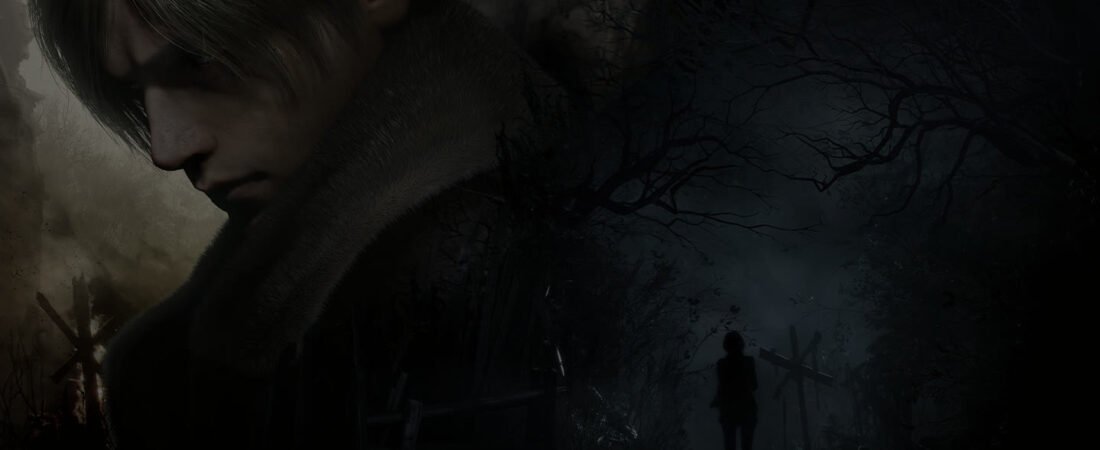
In January 2005, Capcom took its slowest, stiffest horror series, parked the camera on Leon Kennedy’s shoulder, and accidentally rewrote the rules for every third person game that came after. Twenty years and two masterpieces later, Resident Evil 4 is the rare classic that got remade and somehow ended up with two versions people argue are both perfect.
By Ruan Martini, Daily Checkpoint, November 1, 2026
I want to start with the sales pitch I give real people, because Resident Evil has an image problem with normal humans. Say “classic survival horror” to a friend and they picture tank controls, fixed camera angles, three bullets and a green herb standing between them and a death screen. They picture homework. Then I hand them Resident Evil 4, and within ten minutes they are roundhouse kicking a farmer through a fence while a man in a trenchcoat sells them a rocket launcher out of his coat. No homework. No punishment seminar. Just one of the most replayable games ever made, wearing a horror costume.
This is the story of how that happened, twice: the 2005 original that changed the industry, and the 2023 remake that sold faster than any Resident Evil in history. And since this piece pairs with my look at the upcoming Resident Evil Veronica remake, keep one contrast in mind the whole way through. Veronica is the Resident Evil that stayed a fortress. RE4 is the one that opened the gates and let everybody in.
The Development Disaster That Produced a Miracle
Resident Evil 4 spent years being cancelled and restarted. One early version, directed by Hideki Kamiya, got so stylish and supernatural that Capcom spun it off into its own game. You may have heard of it: Devil May Cry. Another version had Leon infected and hallucinating in a foggy castle. Another one had a man with a hook. Version after version went into the bin, until Shinji Mikami, the director of the original Resident Evil, took the director’s chair himself and made the call that defined the game: stop polishing the old formula. He has said he was tired of making the same game again. So he burned it down.
Out went the fixed cameras and tank controls. In came the decision that changed everything: the camera sits behind Leon’s right shoulder, and when you aim, it snaps in close, with a laser sight instead of a crosshair. That sounds small on paper. In practice it meant you could aim at a hand and watch an enemy drop his weapon. Aim at a knee and watch him stumble into range of Leon’s suplex. Enemies stopped being targets and became systems. Every fight became a little physics comedy with a body count.
Mikami also loaded the game with set pieces that never repeat their trick twice: the opening village siege, where the whole town pours out at you and the only winning move is survival until a church bell rings. The cabin defense alongside Luis. The lake monster. The mine cart. The knife fight. Modern games call this pacing. In 2005, on a GameCube, it felt like witchcraft.
January 2005: The Launch, the Betrayal and the 96
Resident Evil 4 launched on January 11, 2005, in North America, as a GameCube exclusive and the flagship of the Capcom Five, a bundle of games meant to rescue Nintendo’s struggling console. Mikami famously said he would cut his own head off, a Japanese expression for quitting in disgrace, if the game ever appeared on another system. So of course Capcom announced a PlayStation 2 port weeks before the GameCube version even launched, because shareholders exist. The PS2 version arrived on October 25, 2005, with weaker visuals and one enormous compensation: Separate Ways, a full side campaign starring Ada Wong, which has been part of the package ever since.
The numbers tell the rest. The GameCube version sold 1.6 million copies and the PS2 version passed 2 million, and the game kept selling through a swarm of ports for two decades, with Capcom reporting 12.3 million copies across all versions of the original. Critics were not subtle about it either. The game holds a 96 on Metacritic, swept Game of the Year awards across 2005, and settled permanently onto greatest games of all time lists, where it remains, unbothered, today.
And the influence is not nostalgia talking. Cliff Bleszinski has openly said Resident Evil 4 influenced Gears of War, the series that then defined a generation of cover shooters built on RE4’s camera. Dead Space built its whole identity on the same shoulder. Basically every third person game you have played since 2005, where the camera hugs the character’s back and the aiming feels physical, is paying rent to a GameCube game about a man rescuing the president’s daughter from a Spanish cult. The old fixed camera era of survival horror effectively ended here. Resident Evil itself never went back.
The Part Nobody Tells New Players: It Is Not a Punishing Game
Here is my favorite thing about RE4, and the reason I recommend it to people who bounced off every other horror game: it respects your time and your blood pressure. The checkpoints are generous. The resources are plentiful by classic series standards. And under the hood, the game runs a quiet dynamic difficulty system that watches how you are doing. Die a few times in the same room and the game subtly eases up: enemies get a little less aggressive, a little less durable. Play like a maniac on a hot streak and it pushes back. You never see the dial. You just feel a game that always seems pitched exactly at the edge of what you can handle, which is the whole magic trick.
Then there is the replay structure, which is where RE4 eats entire weekends. Finish the story and New Game Plus lets you run it again carrying your fully upgraded arsenal, turning a horror game into a victory lap. The Mercenaries mode turns the combat into an arcade score chase. Professional difficulty is there for the people who do want the punishment, and it is entirely optional, sitting in the menu, waiting, not forced on anyone. Even the inventory is fun: a grid based attache case where every egg, herb and grenade is a little Tetris decision.
Leon helps, too. The 2005 Leon is a one liner machine who treats a nightmare like a mild inconvenience at work, and the remake kept his soul intact while giving him a parry, a crouch and a knife that can finally break. This is a horror game where the scariest thing on screen is usually how much ammunition you are about to spend for fun.
2023: The Remake That Had No Right to Work
Remaking Resident Evil 4 was the most dangerous job in Capcom’s remake program. Remake a flawed game and you are a hero. Remake a 96 and one wrong step makes you the person who repainted the Mona Lisa with a spray can. The remake launched on March 24, 2023, for PS5, PS4, Xbox Series X|S and PC, and the verdict landed fast: 93 on Metacritic, and the kind of reviews that use the word definitive without flinching.
The receipts are absurd. Three million copies in two days. Four million in two weeks. And in April 2025, Capcom announced the remake had passed 10 million copies, making it the fastest game in the entire Resident Evil series to reach that milestone, ahead of the Resident Evil 2 remake and Resident Evil 7, which both went on past 15 million, and Village, which passed 11 million. A remake of an eighteen year old game outsold the launch pace of every original entry in a thirty year franchise. The Separate Ways campaign returned as DLC in September 2023, and the whole package keeps charting every time it goes on sale. As I write this, the remake is 9.99 dollars on Steam until November 3, which is not a price, it is a rounding error. If you somehow do not own it, fix that before the sale ends.
What the remake understood is that RE4’s magic was never the graphics. It was the encounter design, the pacing, the comedy of the combat system. So it kept the skeleton, modernized the movement, gave the knife a real job, made Ashley a partner instead of a luggage item, and let the original’s fans and a whole new generation arrive at the same conclusion from opposite directions: this game is ridiculous, and it is perfect.
Where It Stands Now
Resident Evil 4 exists today as two complete, different, legitimate masterpieces with the same name, which almost never happens in this industry. Play the 2005 original for the history, the camp and the laser sight. Play the 2023 remake for the definitive modern version. Either way you are playing the game that taught the industry where to put a camera.
It is also the template that makes me optimistic about Veronica. Capcom’s remake teams have now proven they can rebuild a beloved game without sanding off its personality, and the fact that the same leadership reportedly sits behind the Veronica remake is exactly why that project matters. If you want the full picture of what is confirmed and what is still rumor on that one, it is in the Coming Soon section with the rest of the 2027 watch list.
My take: Resident Evil 4 is the first game I would save from the series if the building was on fire, and I say that knowing Resident Evil 2 remake exists. It is the most fun you can have being chased by villagers, it never punishes you for learning, and it rewards every replay with interest. Some games are important. Some games are fun. This one had the decency to be both, twice, eighteen years apart.
Sources
- Metacritic, Resident Evil 4 (2005), GameCube, score of 96; Resident Evil 4 (2023), score of 93
- Capcom press release, April 25, 2025, “Resident Evil 4 tops 10 Million Units Worldwide” (fastest in series to 10 million; Resident Evil 7 and Resident Evil 2 remake over 15 million; Village over 11 million; Resident Evil 3 over 10 million)
- GameSpot, April 25, 2025, coverage of the 10 million milestone (3 million in two days, 4 million in two weeks at launch)
- Capcom Five and exclusivity history, including the PlayStation 2 port announcement and Separate Ways, as documented in series retrospectives
- Cliff Bleszinski on Resident Evil 4’s influence on Gears of War, via GamesBeat
- Capcom sales reporting for the original versions (1.6 million on GameCube, over 2 million on PlayStation 2, 12.3 million across all versions of the original)
- Steam store listing, Resident Evil 4, sale price checked November 1, 2026