A word that means everything, a word that means nothing, and a pile of sales charts that refuse to cooperate with anybody’s narrative.
By Ruan Martini, Daily Checkpoint, November 1, 2026
Somewhere along the way, “woke” stopped being a word and became a weather system. A game flops? Woke. A game sells ten million copies? Also woke, apparently, but the good kind nobody can define. It has become the laziest explanation in gaming: one word that lets everybody skip the boring parts, like price, timing, genre, and whether the game was actually any good.
I don’t buy it. Not because I love every game on this list, I don’t, and we’ll get to the ones that genuinely talked down to their own customers, but because I checked the numbers, and the numbers tell a messier, funnier story than the slogan does. So let’s do this properly. Three groups of games. The ones that really did lecture the player. The ones that got torched anyway. And the messy middle, where everything caught fire at once for completely different reasons.
Group 1: The Ones That Really Did Talk Down to the Player
Let me be honest first, because these cases are real. Sometimes the criticism wasn’t invented by grifters. Sometimes a game really did sit its audience down for a sermon, and the audience really did get up and leave.
Dustborn is the purest example we will ever get. Red Thread Games’ road-trip adventure, published under Quantic Dream’s Spotlight label in August 2024, is set in a dystopian “Republic of America,” and critics on the right and plenty of ordinary players described the same experience: a game whose politics weren’t background flavor but the whole engine of the story, complete with mechanics built around “canceling” people and misinformation as a literal weapon. Supporters at some outlets praised it as a bold, heartfelt road story. Fine. Both things can be said out loud. What can’t be argued with is the commercial result. Steam Charts records Dustborn’s all-time peak concurrent player count at 76. Seventy-six people. On the entire planet, at its best moment. There are group chats bigger than that.
The studio’s defense is worth printing too, because it’s fair: director Ragnar Tørnquist told Norway’s Gamer.no that the team was caught “completely off guard” by the reaction, that the game “isn’t selling as much as we would like,” and that internal goals hadn’t been met, but he pushed back hard on the word flop and said most of the fury came from people who never played it and never would. He’s not wrong about the pile-on. But a game doesn’t need a conspiracy to die. It needs to make the people it was built for feel like the target audience and everyone else feel like the target. Dustborn did the second one beautifully.
Saints Row (2022) is the sadder story, because this one hurt real people. Volition rebooted its own beloved series with a young crew of broke roommates committing crimes to pay off student loans and rent, and a huge part of the fanbase read the reveal as the series apologizing for itself. Reviews landed in the low 60s on Metacritic, with VGC calling the game a “buggy, dull mess.” Embracer CEO Lars Wingefors admitted he was “personally sad to also see fans not happy” with a reception he called polarizing. The receipts came later: reporting from VGC, based on a former Volition staffer’s account, put the reboot at roughly 1.7 million copies, the lowest-selling mainline entry in the series’ history, per that reporting. In August 2023, Embracer closed Volition after 30 years. Saber Interactive’s CEO Matthew Karch said the quiet part later: the games “were so expensive for what they were” and the studio “didn’t know what they were building.” Notice his diagnosis. Not a slogan. Direction and money.
Forspoken closes this group, because its problem wasn’t politics, it was tone. Square Enix’s January 2023 action RPG spent two years being roasted for one trailer clip of its heroine’s quippy dialogue, which the internet turned into a copypasta within hours. Players weren’t debating ideology; they were cringing. Then the game shipped to mixed reviews, and Square Enix president Yosuke Matsuda said it himself on an earnings call: reviews had been “challenging” and “sales have been lacklustre.” Weeks later, developer Luminous Productions was merged out of existence as a standalone studio, effective May 1, 2023. A $70 game (one of the first at that price, too, I wrote a whole case file about what followed) whose marketing made people laugh at it instead of with it. The lesson nobody prints on a poster: if the internet decides your heroine is a meme, no amount of sincerity in the writing room saves you.
Group 2: The Ones That Got Torched Anyway
Now the group that breaks the slogan completely, because here the games were good, or sold fine, or both, and the war showed up anyway.
Alan Wake 2 reviewed like a masterpiece in October 2023, won three awards at The Game Awards, and became the fastest-selling game in Remedy’s history, hitting 1.3 million copies by February 2024. None of that was the story online. The story was Sweet Baby Inc., a small Montreal narrative consultancy that had worked on the game, after a Steam curator page called “Sweet Baby Inc Detected” began listing every title the company had touched and urging players to avoid them. As Kotaku reported, the theory that spread was that this tiny consulting firm had forced Remedy to make co-protagonist Saga Anderson Black. Remedy’s game director Kyle Rowley answered it personally, in public: “It’s absolutely not true.” The rumor’s origin, per Kotaku’s reporting, was a forum post from October 2023. That’s the entire supply chain of that scandal: a forum post, a curator page, a hundred thousand followers, and a harassment pile aimed at a 16-person company.
And the game itself? It kept selling, the slow way Remedy games always sell. By the end of 2024 it had passed 2 million copies and fully recouped its development and marketing costs, and Remedy started collecting royalties. Was it a rocket ship? No, and the honest reasons are boring ones: it launched digital-only, and on PC it was exclusive to the Epic Games Store instead of Steam, a decision analysts and even other publishers publicly flagged as costing it reach. Remedy has since defended the Epic deal as the reason the game exists at all. Boring reasons. Commercial reasons. The culture war was the loudest thing about Alan Wake 2 and the least important.
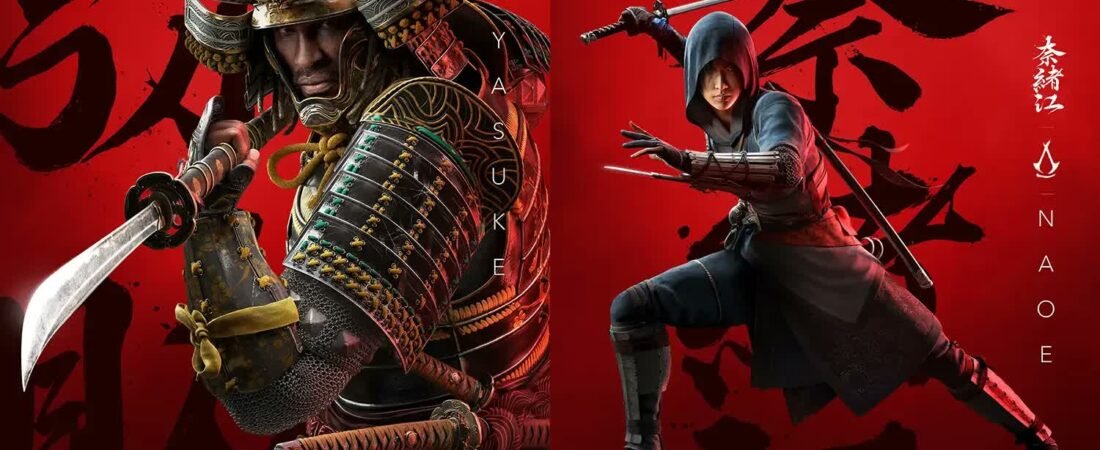
Assassin’s Creed Shadows was declared dead for almost a year before it existed in anyone’s hands. The fight was over Yasuke, the real historical figure, an African man who served Oda Nobunaga, appearing as a samurai co-protagonist. A petition to cancel the game gathered more than 94,000 signatures, criticism from some Japanese players and commentators escalated into political debate in Japan, and in July 2024 Ubisoft took the unusual step of publishing a direct apology to its Japanese community, saying it was sorry elements of its promotion had caused concern and stressing the games are works of fiction, not factual history. The game got delayed twice. Guillemot later told an industry audience, per Game File’s reporting, that the company realized “it was a battle, a battle with our fans, to demonstrate that we were, in fact, more of a video game than a message.”
Then Shadows launched in March 2025 and the boring part happened: people bought it. Ubisoft announced more than a million players on day one and 3 million players inside the first week, with the second-highest day-one sales revenue in the entire history of the franchise, behind only Valhalla. By five months in, per Ubisoft, it had passed five million players. The petition is still online somewhere, presumably. The game outsold almost every Assassin’s Creed ever made at launch. Both of those facts are true, which is exactly why this debate makes everyone so angry.
Star Wars Outlaws is the mirror image: the discourse called it a culture-war casualty, and management’s own explanation didn’t cooperate. Ubisoft admitted in September 2024 that Outlaws’ launch sales were “softer than expected,” and Insider Gaming reported it had just ticked over one million copies in its first month, small numbers for a Star Wars game. But when CEO Yves Guillemot later explained the miss to shareholders, he blamed the Star Wars brand being in “choppy waters” and a game that still needed polish in its early weeks. Not the politics. The brand and the bugs. Critics gave it mid-70s reviews, players complained about stealth and AI, and the $110 and $130 special editions didn’t help anybody’s mood. Sometimes a game underperforms because it’s a decent game wearing an enormous price tag in a tired franchise’s rough patch. I know. Devastating for the narrative.
Group 3: The Messy Middle
And then there are the two cases where I genuinely can’t give you a clean answer, because nobody honestly can, which, of course, hasn’t stopped anybody.
Concord is the biggest launch disaster in modern gaming history, and it isn’t close. Sony’s $40 hero shooter launched on August 23, 2024, peaked at 697 concurrent players on Steam (yes, that’s the real Steam Charts number), and was taken offline on September 6, fourteen days later, with full refunds. Analysts cited by IGN estimated roughly 25,000 copies sold, total. Firewalk Studios was closed for good in October 2024. Game over, studio over, hundreds of jobs over.
Now watch what happened to the corpse. Because Concord’s character designs had been criticized online for months, including a loud pre-launch fight over pronouns listed in character profiles, the shutdown instantly became the culture war’s favorite trophy: proof, one side said, that “go woke, go broke” is a law of physics. But go read what analysts and post-mortems actually blamed, and a completely different list falls out: a $40 price tag in a genre ruled by free games like Valorant, Overwatch 2 and Apex Legends; a hero shooter arriving about eight years after the genre’s peak; a marketing campaign that somehow made a Sony first-party game invisible; and gameplay most reviewers called competent but generic. PC Gamer’s post-mortem argued the $40 price alone, against free rivals, was enough to kill it. Did the design discourse help? It certainly didn’t. But here’s the thought experiment I can’t get past: make Concord free, make it excellent, and keep every single character design identical. Does it live? Almost certainly it does better. Now keep it $40 and generic and strip out every pronoun on every profile. Does it live? It dies in thirteen days instead of fourteen. Price and product were the loaded weapon. The culture war just fought over who got to pose with it.
Dragon Age: The Veilguard is the case that should make both armies nervous. It reviewed well, an 82 on Metacritic for PS5, and it still missed. In January 2025, EA told investors the game had engaged around 1.5 million players in its launch quarter, roughly half of what the company expected, and the fallout at BioWare was immediate: layoffs and a studio shrunk to a fraction of its old size. And in October 2026, EA closed BioWare entirely after 31 years, with Veilguard as its final major release. That’s the receipt. It’s grim, and it’s real.
But which receipt is it? The discourse fixated on a handful of scenes, the nonbinary companion Taash, and one widely clipped sequence where a character performs push-ups as an apology ritual after a misgendering, which players and critics across the spectrum called preachy and immersion-breaking. Polygon’s recent retrospective argues something less cinematic: a game cancelled once, rebooted from a live-service design the studio never wanted, built under corporate interference, arriving a decade after the last entry into a market that had moved on. Both explanations exist in the world at the same time. My honest read, as a guy who reviews the charts for a living: a decade-late sequel with a chopped-up development, sold to an audience the series had kept waiting since 2014, had a very hard job before a single cutscene shipped. The culture war didn’t invent Veilguard’s problems. It just made sure the autopsy would be performed in public, by the loudest people in the room, each reading only the page they liked.
What the Numbers Actually Say
So let’s total the scoreboard, because this is the part of the video essay nobody makes.
If “go woke, go broke” were a law, Alan Wake 2 would be a crater. Instead it’s Remedy’s fastest-selling game ever, in profit, collecting awards. If it were a law, Shadows would have face-planted in front of that petition. Instead it posted the second-biggest launch revenue in its franchise’s history. And at the exact same moment the slogan was being chanted over Concord’s grave, the two loudest data points in this industry were a Chinese studio’s mythological action game selling in the tens of millions and, this past month, the biggest purchase-intent number market researchers at Circana have ever recorded, for a game we’ll get to in a second, which has a Latina co-protagonist the internet has been calling woke since 2023.
The confounders are sitting right there in every single case, in plain sight, wearing name tags. Dustborn: a niche visual novel with the marketing budget of a food truck and messaging aimed at half its potential audience. Saints Row: a reboot with no direction and nine-figure costs, per the people who owned it. Forspoken: a meme, a $70 tag and mixed reviews. Concord: $40 against free. Outlaws: polish and a wobbling Star Wars brand, per its own CEO. Veilguard: a ten-year gap and a development run through a shredder. Wokeness, whatever is left of the word, is at most one ingredient in a couple of these recipes. Treating it as the recipe is not analysis. It’s merch.
And there’s a second business running underneath all of this that nobody at either podium wants to discuss: outrage is an industry too. A curator page that “detects” a 16-person consulting company can gain a hundred thousand followers. Channels need a villain every week, and a slogan that explains every flop in advance is a content schedule, not an insight. Meanwhile the other podium sells the mirror image, every critic dismissed as a bigot, every legitimate writing complaint treated as a hate campaign, and certain studios have happily hidden behind that shield when their games simply weren’t very good. Players, actual players, the people who fund this entire circus, get used as a brand by both sides. I don’t let anyone do that with my audience, and I’d suggest you not let anyone do it with you.
The GTA 6 Test
Which brings us home, because the perfect experiment is eighteen days away.
GTA 6 has been called woke since the first trailer, and the charge has one name: Lucia. The original playbook against female leads is “they made her ugly to own you,” and on Lucia that line simply doesn’t work, she’s a conventionally gorgeous Rockstar protagonist in a Bonnie and Clyde story, so the goalposts quietly packed up and moved. Now the complaints, and you can set your watch by them, are that she beats up men in the trailers, and that she gets more screen time than Jason. The accusation changed shape to survive contact with the evidence. That is not criticism. Criticism doesn’t need to keep re-arming itself.
And the market? The market isn’t listening. Circana reported on October 28, 2026 that 29% of active console and PC gamers in the US plan to buy GTA 6, the highest purchase intent the firm has ever recorded for any game, ever. Highest. Ever. Recorded. The most “woke”-accused game in the world is also the most wanted game in the world, and if you keep your ear on the tracker I’m running here at Daily Checkpoint, you’ll notice that’s been the story for two years: every trailer breaks records, every delay makes the hunger louder, and the outrage cycle spins itself out in a week while the pre-orders pile up.
So here’s my prediction, and I’ll stand on it on November 19 from a very sleep-deprived livestream chair: GTA 6 will be the best-selling entertainment product on Earth, Lucia and all, and within six months the same goalposts will have moved again, to the price, to the online mode, to whatever’s next. The games on this list didn’t die or fly because of a word. They died or flew because of what they were, what they cost, and when they showed up. Everything else is somebody selling you a jersey for a war that makes them money and costs you yours.
See you in Leonida.
Sources: Dustborn player peak via Steam Charts; Ragnar Tørnquist’s Gamer.no interview as reported by Bounding Into Comics. Saints Row sales reporting and reception via Video Games Chronicle; Matthew Karch’s comments via GamingBolt. Forspoken’s “lacklustre” sales per Square Enix via GamesHub; Luminous Productions merger via CGMagazine. Sweet Baby Inc. discourse and Kyle Rowley’s denial via Kotaku; Alan Wake 2 sales milestones and recoupment via Remedy’s financial statements reporting and Wccftech. Assassin’s Creed Shadows petition and Ubisoft statement via PC Games Insider; 3 million players and day-one revenue via OpenCritic; Guillemot’s “video game than a message” remarks via GameSpot. Star Wars Outlaws first-month sales reporting via 80 Level; Guillemot’s “choppy waters” explanation via Female First. Concord shutdown, analyst estimates and Firewalk closure via Polygon. Veilguard engagement figures, Metacritic and BioWare’s closure via Polygon’s retrospective and Game Rant. GTA 6 purchase intent: Circana, October 28, 2026. Our living list of what’s actually confirmed about GTA 6 is the tracker.