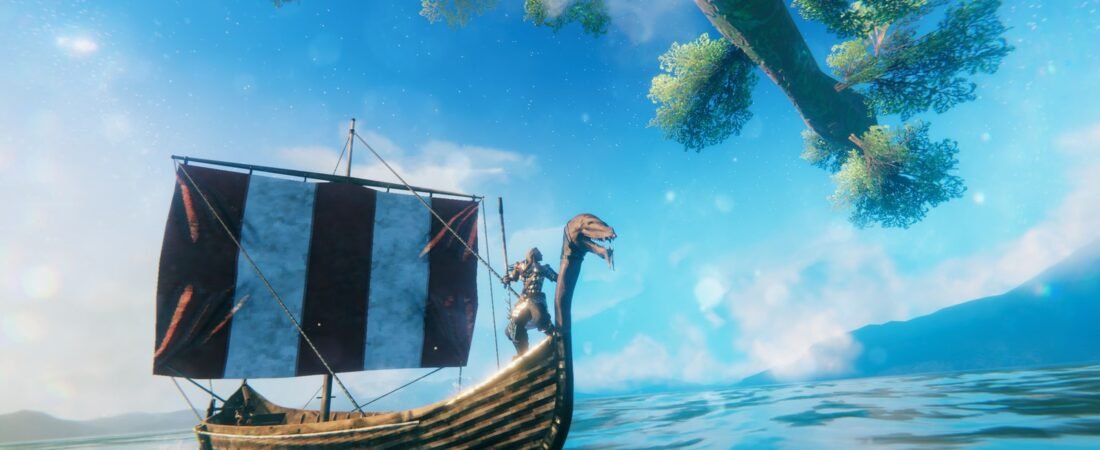
In February 2021, in the middle of a locked-down winter, a $20 Viking survival game from a five-person Swedish studio sold a million copies a week for five straight weeks. The fourteenth entry in my indie analysis series is Valheim, the early access phenomenon that treated survival less like punishment and more like a saga, and that finally reached version 1.0 in September 2026, five and a half years after the world moved in.
What Valheim is
Valheim is an open-world survival game from Iron Gate Studio, published by Coffee Stain Publishing. It entered Steam early access on February 2, 2021 for Windows and Linux, reached Xbox (with Game Pass) in March 2023, and launched its full 1.0 version on September 9, 2026 alongside PlayStation 5 and Nintendo Switch 2 versions; it now sells for $29.99. You are a slain Viking warrior dropped into Valheim, the fictional tenth world hanging in the branches of Yggdrasil, and set one job by Odin: kill his ancient enemies, prove yourself, earn Valhalla.
It plays solo or in co-op for up to ten players, on procedurally generated worlds built from shareable seeds, in a stylized low-resolution 3D style lit like a AAA game, which is the first hint that its priorities are unusual.

A side project with a philosophy
Co-founder Richard Svensson started Valheim in 2017 as a spare-time project called Fejd, Swedish for feud, after abandoning an earlier simulation game named Tolroko. His diagnosis of that failure became the studio’s creed: it is redundant to build simulation systems for their own sake rather than for the player. He left Pieces Interactive in 2018 to work on it full time, pulled in co-worker Henrik Törnqvist, and the team that shipped one of the biggest games of 2021 numbered five people. Svensson has said the bigger influences were Zelda and Skyrim, not other survival games, and it shows in the structure.
Early access landed on February 2, 2021. The game sold five million copies in its first month, 5.7 million in five weeks, and passed ten million on Steam by July 2022, all while Iron Gate stayed tiny and let external studios (Piktiv, Fishlabs) handle the console ports so the core team could keep building the game itself.
Food is your character sheet
Valheim’s quiet revolution is that you never starve. Food is not a meter to babysit; it is your build. Three food slots set your maximum health, stamina and Eitr (the magic resource), with different dishes weighting the three pools differently: heavy meats for health, lighter fare for stamina, special dishes for magic. Every expedition begins in the kitchen, deciding what kind of Viking this trip needs, and the buffs decay over time so the decision keeps coming back.
Around that sits a skill system that grows by doing, running, swimming, swinging each weapon type, up to level 100, and a stamina-based combat system of one and two-handed weapons, shields, bows and (from the Mistlands on) genuine spellcasting. Death drops your gear on a tombstone where you fell, which makes every corpse run a small story the game writes about your own overconfidence.
Eight bosses hold the keys
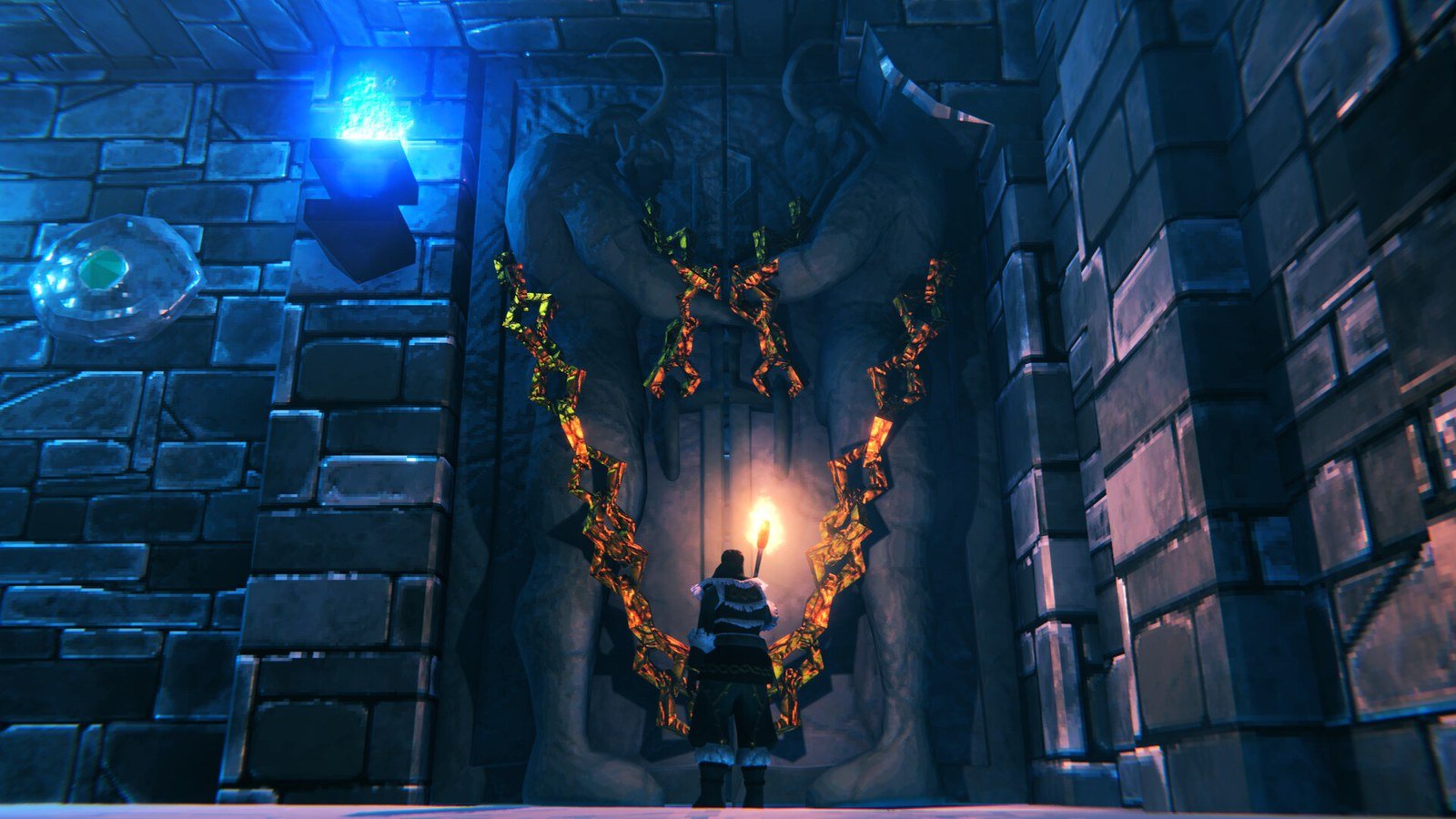
The world’s biomes (Meadows, Black Forest, Swamp, Mountains, Plains, Ocean, Mistlands, Ashlands, Deep North) form a ladder, and the eight bosses are its locks. Each boss is summoned at an altar with specific offerings, and each kill unlocks the material tier of the next biome: you cannot mine the Swamp’s iron economy into existence before its predecessor falls, and so on down the line. Boss trophies hang at the central sacrificial stones and grant Forsaken powers, strong temporary abilities, one carried at a time.
The genius is that progression lives in geography rather than in a quest log. The map is the tech tree. Sailing stitches it together: boats from rafts to full longships, real wind, real weather, and cargo holds full of ore are how a world’s economy physically moves. The ocean is not a loading screen; it is the game’s second overworld, and it can kill you in more ways than most biomes can.
Five years of early access, done in public
Iron Gate used early access the way the format always promised and rarely delivers: as a years-long public construction. Hearth & Home (September 2021) deepened food and building. The Mistlands (December 2022) added a fog-drowned biome of giant insect ruins, friendly dvergr NPCs, and the entire magic system. The Ashlands (May 2024) turned the south into a volcanic war zone with sieges and the seventh boss, Fader. A smaller Call to Arms update reworked weapons and added trinkets.
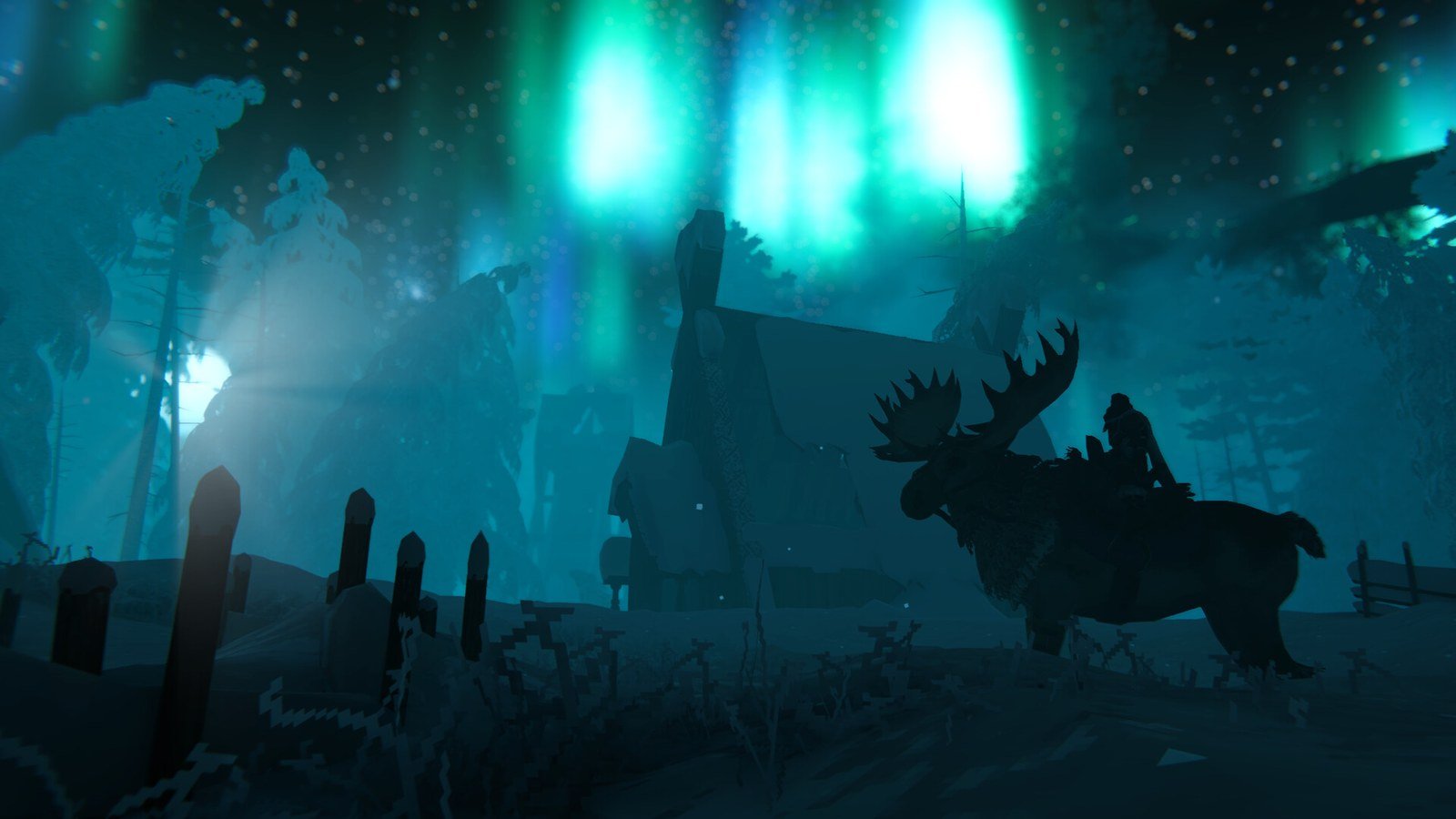
The 1.0 launch in September 2026, with the Deep North completing the biome wheel, closed the longest early access act in the genre. Through all of it the presentation stayed the same: chunky low-poly models under volumetric light and weather that keeps winning screenshot contests the studio never entered.
Reception
Valheim scored 89 on Metacritic for PC, and its OpenCritic average stands at 91 across 21 reviews, most judging the finished 1.0. IGN gave it 9 out of 10 in early access. PC Gamer named it their Game of the Year for 2021 and called it a “rare exception” among early access games, refined and satisfying already; it won Best Debut and the Audience Award at the 2022 Game Developers Choice Awards and was nominated for Best Debut Indie and Best Multiplayer at The Game Awards 2021. Commercially, ten million Steam copies by mid-2022 made the five-person team one of the most efficient in the industry’s history, per capita.
My take
The analytical point about Valheim is restraint. Every survival system that usually exists to annoy (hunger, decay, grind) was re-aimed at expression: food is a build, the map is a tech tree, the base is a home you defend because you love it, not because a timer says so. Svensson’s Tolroko lesson, simulate for the player or not at all, runs through the whole design.
It is also the rare early access game whose final form justifies the wait. Five million people bought a promise in a month. Five years later, the promise was kept, in full, by roughly the same handful of people who made it.
Sources
- Steam store page and Steam API, Valheim (Iron Gate Studio / Coffee Stain Publishing): price, app details
- Wikipedia, Valheim: development, updates, gameplay systems, sales milestones and reception
- OpenCritic: Valheim average score of 91 across 21 reviews
- Metacritic: PC score cited in the panel and text
- PC Gamer: Game of the Year 2021 and early access review coverage
The Checkpoint Poll
Leave a Reply