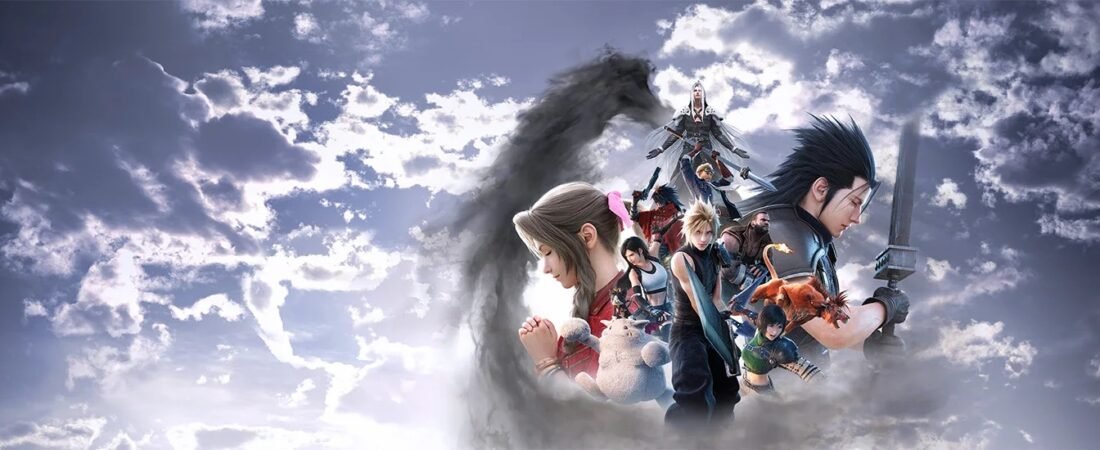
In 1997, Final Fantasy VII was one game on three discs. The remake project that began in 2020 will have taken three games, seven years and three console ecosystems to tell the same story. In Spring 2027, on the thirtieth anniversary of the original, it finally ends. The last one is called Revelation, and for once, Square Enix actually gave us a window with its name on it.
By Ruan Martini, Daily Checkpoint, November 1, 2026
Let me confess something before the receipts, because this one is personal in a way the calendar pieces usually are not. I did not grow up rich in consoles, so my Final Fantasy VII education came late and second hand, through friends, borrowed discs and the kind of playground mythology that made Sephiroth sound like a natural disaster. When Square Enix announced a remake at E3 2015, and the crowd reaction sounded like a religious event, I understood the scale of the thing before I fully understood the game. Eleven years later I have played the original, played both remake entries, and developed strong opinions about all of it, which is the correct outcome. So yes, I am excited. But excitement is not a source, and this trilogy has survived a decade on promises, so let us do the usual thing: what is confirmed, what is merely reported, and what the ending of this story has to carry.
The Announcement, Receipt by Receipt
The name and the window are CONFIRMED, and they arrived the loud way. At Summer Game Fest Live on June 5, 2026, Square Enix officially announced Final Fantasy VII Revelation, the third and final entry in the Remake trilogy, and dated it to Spring 2027 in the same breath. Director Naoki Hamaguchi presented the reveal trailer and an extended gameplay look on stage, alongside Matt Mercer, the English voice of Vincent Valentine. Square Enix’s own press release, issued the same day, locks the important part in writing: Revelation releases in Spring 2027, simultaneously, for PlayStation 5, Nintendo Switch 2, Xbox Series X|S and PC via Steam, the Epic Games Store and Xbox PC.
Read that platform list again, because it is quietly historic. The first Remake launched as a PlayStation exclusive in 2020. Rebirth launched as a PlayStation 5 exclusive in 2024 and wandered to other platforms later. Revelation is the first entry in this trilogy that belongs to everybody on day one, no timed exclusivity, no waiting a year to find out if your platform made the list. Whatever you think of the trilogy’s pacing, that is the correct way to end it, and it tells you Square Enix wants the finale to be an event, not a console war trophy. Hamaguchi also gave the game its theme on stage: resolve. Every member of this party walking into the final battle knowing what it costs. As themes for an ending go, that one is not subtle, and it is not supposed to be.
One more receipt, because it says a lot about where the game actually is: speaking to Polygon around the reveal, Hamaguchi said the game is already playable, technically, and that the team is polishing it to the quality they want to deliver. Directors say that sentence in public when it is true, because the internet keeps receipts now. Spring 2027 is not a hope. It is a plan with a mostly finished game under it.
The Long Road: One Game, Three Boxes, Seven Years
It is worth standing back and looking at the whole absurd, magnificent timeline, because no other remake in history has been built like this.
The original Final Fantasy VII launched in Japan on January 31, 1997, a single game, one complete story, beginning to end in one box. The remake project was announced at E3 2015 to scenes people still post clips of. Final Fantasy VII Remake finally arrived in April 2020, and it covered Midgar, the opening hours of the original, expanded into a full forty hour game that ended with the story openly breaking away from the 1997 script. Then came Intergrade, the enhanced version with its Yuffie episode. Then, in February 2024, Rebirth: a huge, generous, occasionally exhausting second chapter that took the party out into the open world and ended at the Forgotten Capital, on the most debated scene in the series, reimagined in a way that split the fandom cleanly in two and has kept it arguing for two years.
And now Revelation must do the hardest job in the trilogy. It has to cover the entire back half of the original story, the Weapons waking up, the return to Midgar, the final descent, and it has to land an ending for a story that the remakes deliberately complicated, with timelines, whispers and a Zack-shaped question hanging over everything. Remake got to be a promise. Rebirth got to be a celebration. Revelation has to be a conclusion, and conclusions are where trilogies go to be judged forever. No pressure, Hamaguchi.
What Rebirth Set Up, and What Revelation Has Shown
Spoiler discipline first: I am not going to relitigate Rebirth’s ending here, because some of you are still playing it and because the argument deserves its own article. What matters for Revelation is the board Rebirth left behind. The party is together, battered and heading north. The planet is dying in public now, with Meteor on the horizon. Sephiroth’s plan is bigger and stranger than the 1997 version. And the remakes have spent two games teaching us that this version of the story can swerve, which means nobody, not even those of us who can recite the original, actually knows how the final act plays. That is a genuinely rare thing for a remake to achieve, and it is the trilogy’s smartest trick.
What Revelation has shown so far, in confirmed material, is scale. The headline feature, per Square Enix and the reveal coverage, is the Highwind: for the first time in the trilogy, the whole planet is freely explorable from the airship, and you can drop out of it and land anywhere to continue on foot. Anyone who played the original knows why the crowd lost its mind at that shot. The Highwind is the moment the 1997 game opened up and became a world. Rebuilding that in the remake’s engine is the technical flex of the entire project.
Then, at gamescom Opening Night Live in August 2026, a second trailer added the receipts I personally needed: the Weapons, the original game’s kaiju superbosses, reimagined and looking appropriately apocalyptic, plus the summon Typhon and more of the open world traversal. Square Enix also confirmed a small kindness in that same announcement: players with save data from Remake Intergrade or Rebirth get bonus items in Revelation, which is the correct way to reward people who bought the same story three times. Wishlist pages are live on every platform, with eleven languages of text support reported on the Steam page and full voice acting in English, French, German and Japanese. One casting note has circulated in the coverage, reported by Hypebeast among others: Sephiroth’s English voice changes hands for the finale, with Travis Willingham taking over the role from Tyler Hoechlin, who was unavailable. Endings are hard enough without recasting your villain, so credit to everyone involved if that lands seamlessly.
The Exact Date Is Still Only a Rumor
Now the discipline section, because this site does not let a good headline outrun the evidence. Square Enix has confirmed Spring 2027. Square Enix has not announced a day. Full stop.
An early April date for Revelation is REPORTED only. It circulates via calendar roundups, including Pogwire’s 2027 release calendar, and some retailer listings have penciled in early April, with April 8, 2027 appearing in a few store databases. Retailers pencil dates in for preorders the way weather apps guess next month: sometimes informed, sometimes a placeholder with confidence issues. Treat April as the current best reporting, not as a fact, and treat anyone selling you a specific day as if Square Enix announced it as someone selling you something. When the real date comes, it will come from Square Enix, probably at a showcase, probably with a trailer that makes me emotional in public. I will update our Coming Soon coverage the day it lands.
Either way, look at where it sits. Spring 2027 puts the finale right after the February pile up I already wrote about, in the year GTA 6’s shadow finally lifts, in a season where it can be the biggest RPG story on Earth for weeks. After a decade of this project being an industry punchline about development time, Revelation gets to land like an event. There is a timeline where the remake trilogy is remembered as a bloated experiment. The evidence so far says we are not in it. We are in the timeline where Square Enix spent seven years and three games proving that a remake can be a reinterpretation, an argument and a love letter at the same time, and the only thing left is the landing.
Where It Stands Now
The honest summary, one more time. CONFIRMED by Square Enix: the title Revelation, the Spring 2027 window, the simultaneous launch on PS5, Nintendo Switch 2, Xbox Series X|S and PC, the Highwind’s fully explorable planet, the Weapons, and a finale that lands in the thirtieth anniversary year of the 1997 original. REPORTED, and labeled as such: an early April exact date, from calendar roundups and retailer listings, unannounced by Square Enix. UNKNOWN, and I will not invent it: the price, the length, and whether the ending sticks the landing that two games of timeline chaos have made almost impossibly heavy.
Thirty years ago, this story fit on three discs and ended. In Spring 2027, it ends again, bigger, stranger and in front of everybody at once. So tell me, because this is the argument that matters: do you trust the remakes to land this ending, or is part of you still worried that two games of build up wrote a check the finale cannot cash? And the question under the question, the one 1997 players have been carrying for three decades: after everything Rebirth changed, do you even want the same ending? I am reading every reply. Some stories you cover. This one, I am just a fan with a website and a deadline, and Spring cannot come fast enough.
Sources
SQUARE ENIX press release via Business Wire, June 5, 2026, “FINAL FANTASY VII REVELATION Announced: Experience the Journey’s End in Spring 2027” (title, Spring 2027 window, simultaneous launch on PlayStation 5, Nintendo Switch 2, Xbox Series X|S and PC, thirtieth anniversary year of the original). Summer Game Fest Live reveal coverage by Video Games Chronicle, Polygon and Kotaku, June 5 and 6, 2026 (Hamaguchi on stage, the theme of resolve, the Highwind’s explorable planet, the game already playable per Hamaguchi via Polygon). SQUARE ENIX press release for gamescom Opening Night Live, August 25, 2026, via Square Enix Press and GamesPress (second trailer, the Weapons, the summon Typhon, save data bonuses from Remake Intergrade and Rebirth, wishlist availability). Hypebeast’s reveal coverage, June 2026 (Highwind traversal details, reported Sephiroth voice change). Noisy Pixel on the Steam page and language support. Pogwire 2027 release calendar (early April window, REPORTED, not announced by Square Enix). Daily Checkpoint 2026 and 2027 release slate.